The Many Faces of Venus
Beauty through changing centuries
One goddess, many ideas of beauty. Venus travels from Renaissance myth to private rooms, mirrors, and Rococo fantasies. Watch how the pose remains familiar while the meaning around it changes.
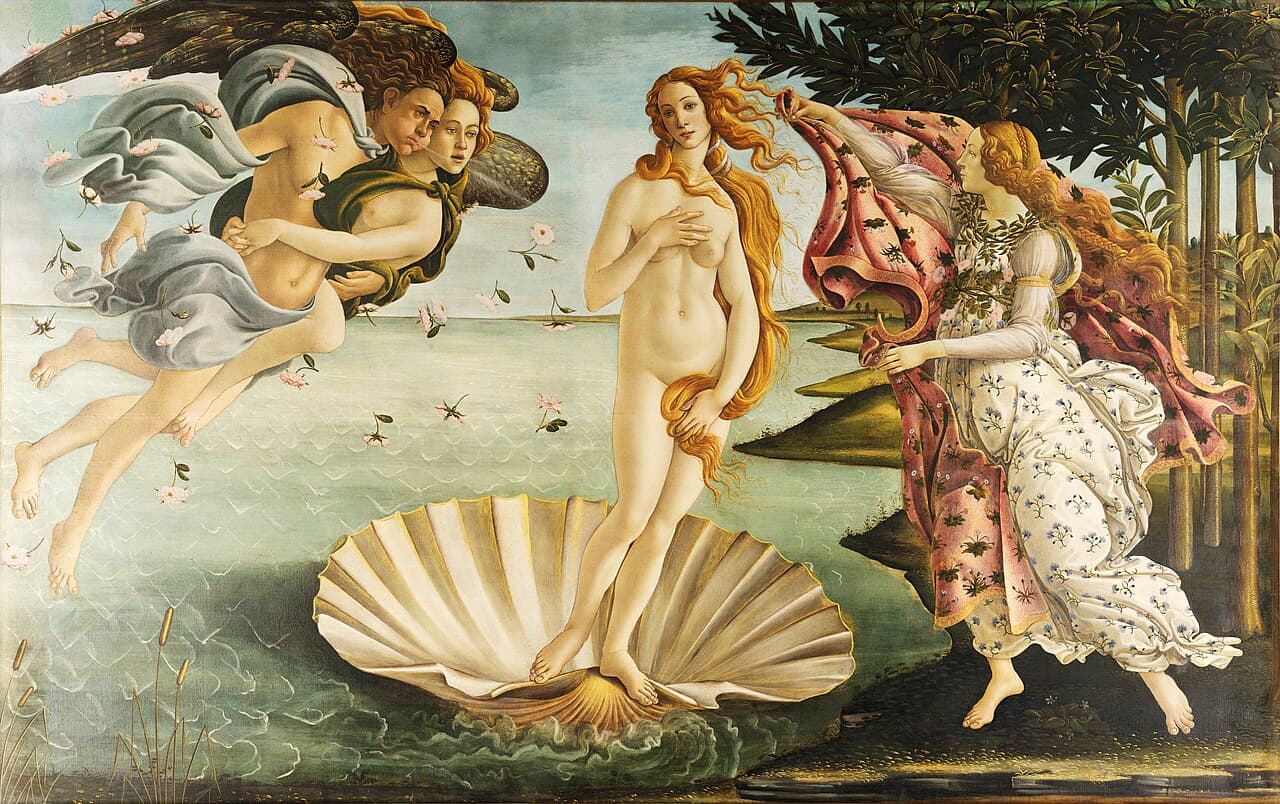
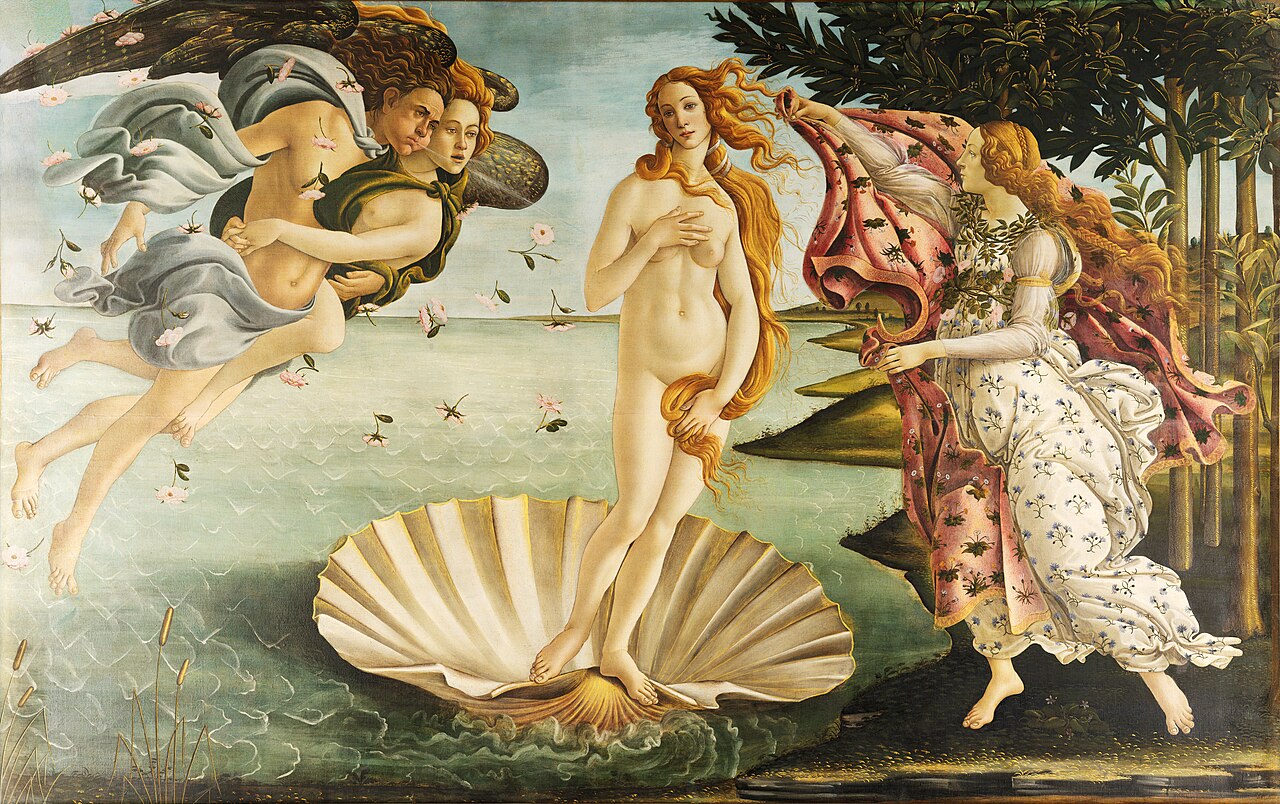
The Birth of Venus
Sandro Botticelli · 1478–1485
The goddess arrives on a shell, exposed to wind and welcomed by a cloak. Beauty begins as a mythic arrival.
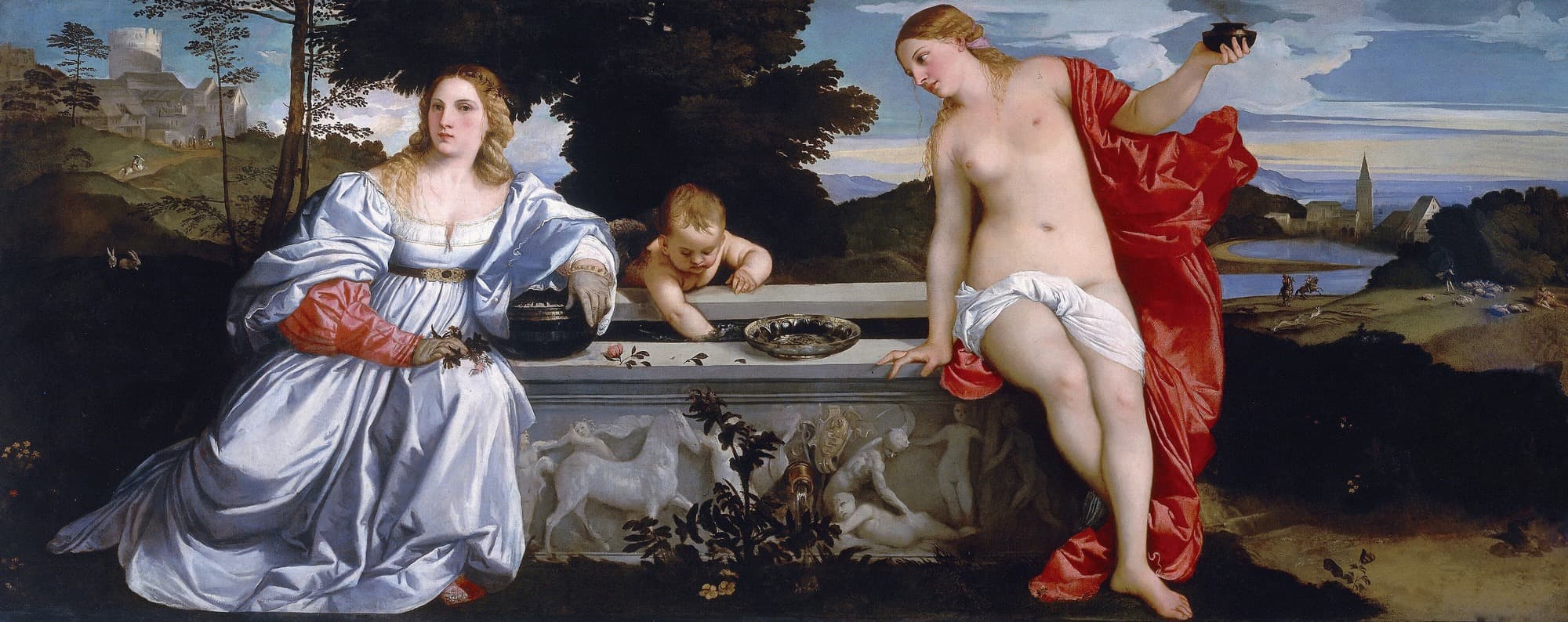
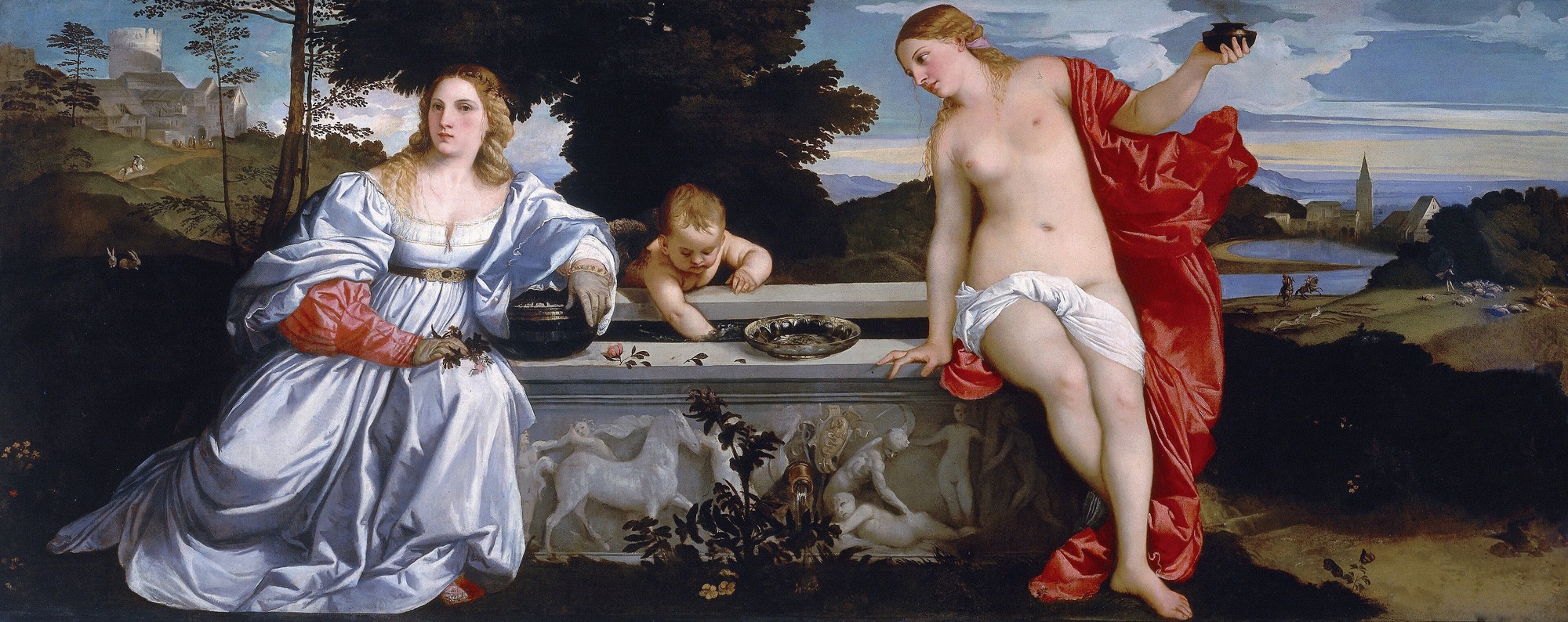
Sacred and Profane Love
Titian · c. 1514–1515
Two female figures invite debate: earthly and heavenly love are not as easily separated as they first appear.
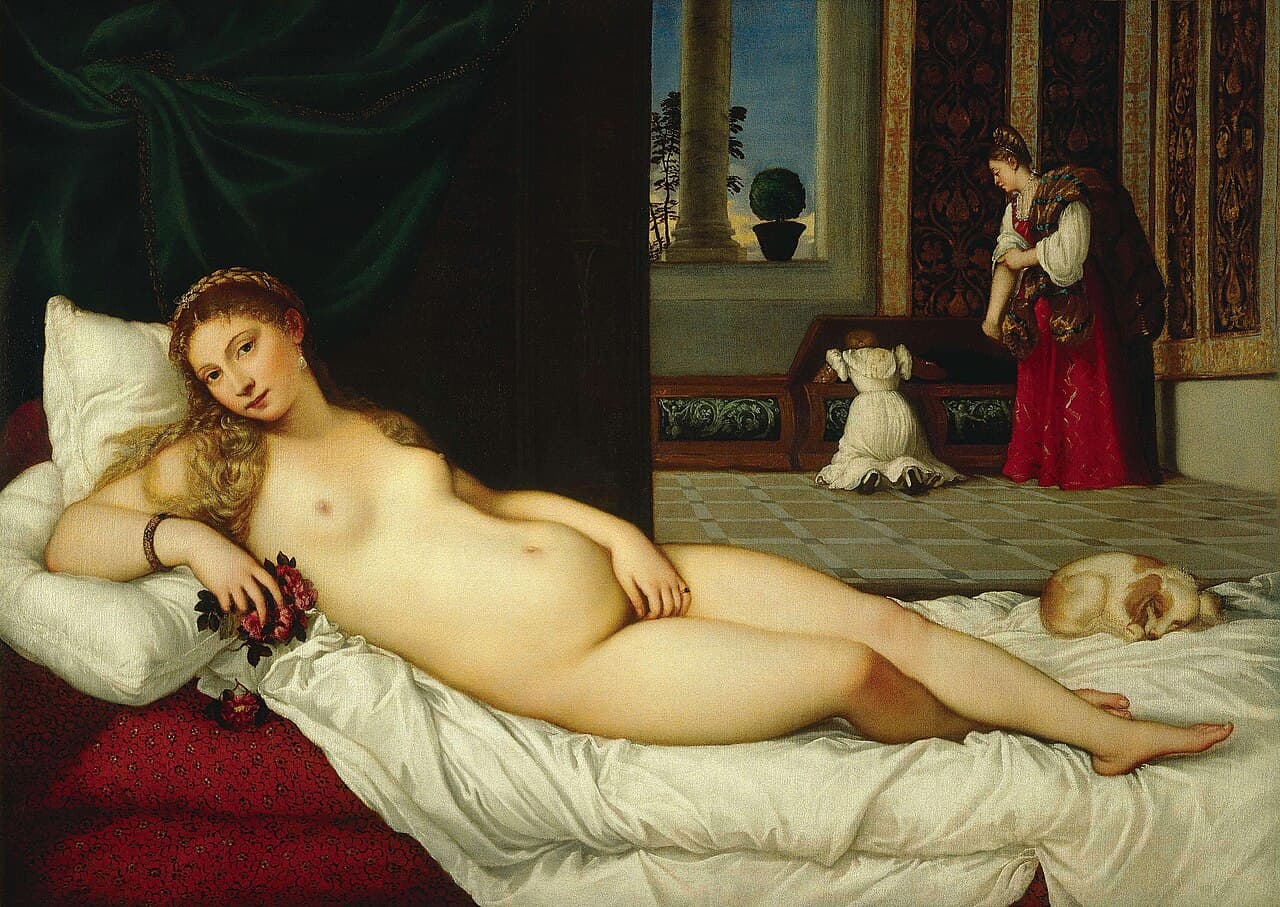
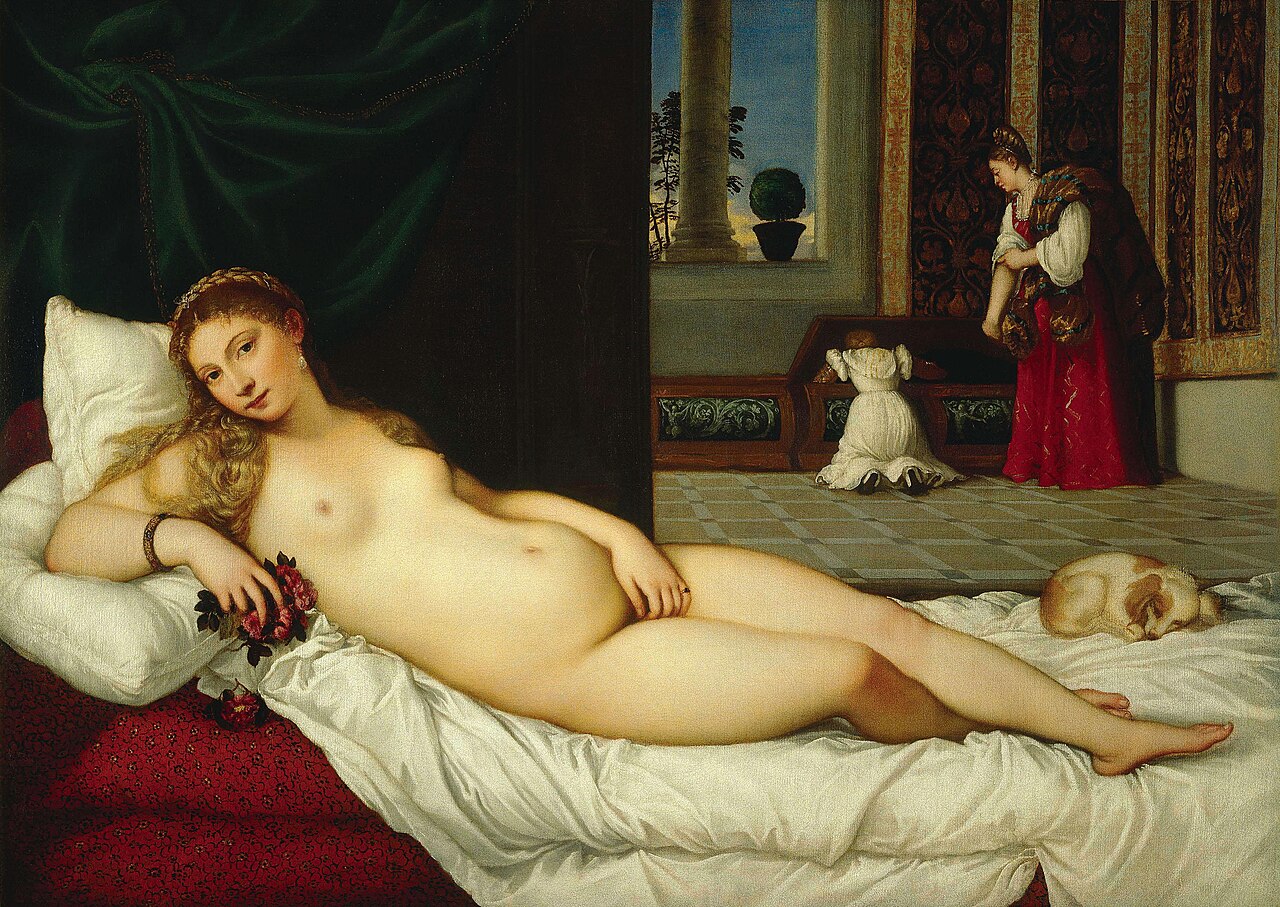
Venus of Urbino
Titian · 1538
The ancient goddess is brought into a recognizably intimate interior, changing the distance between viewer and subject.
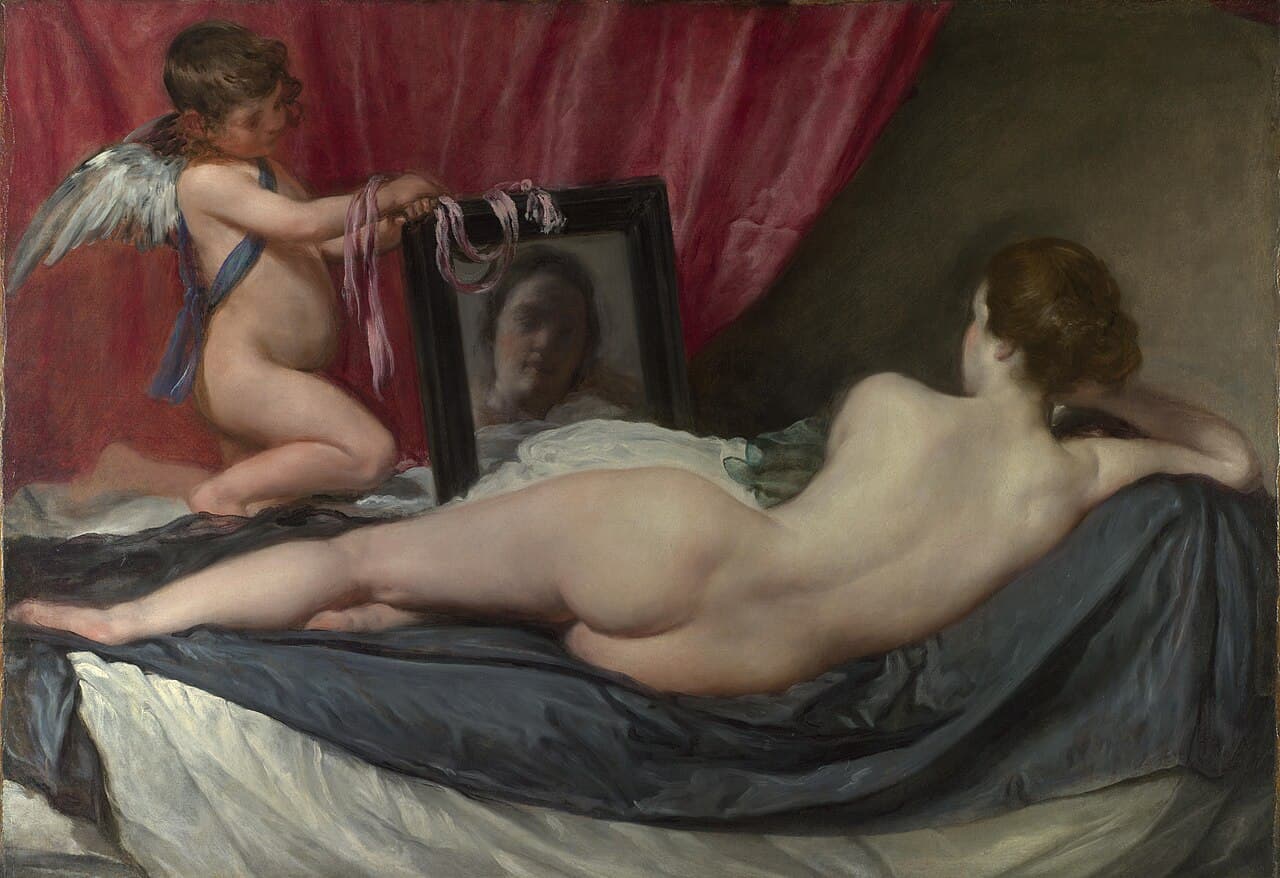
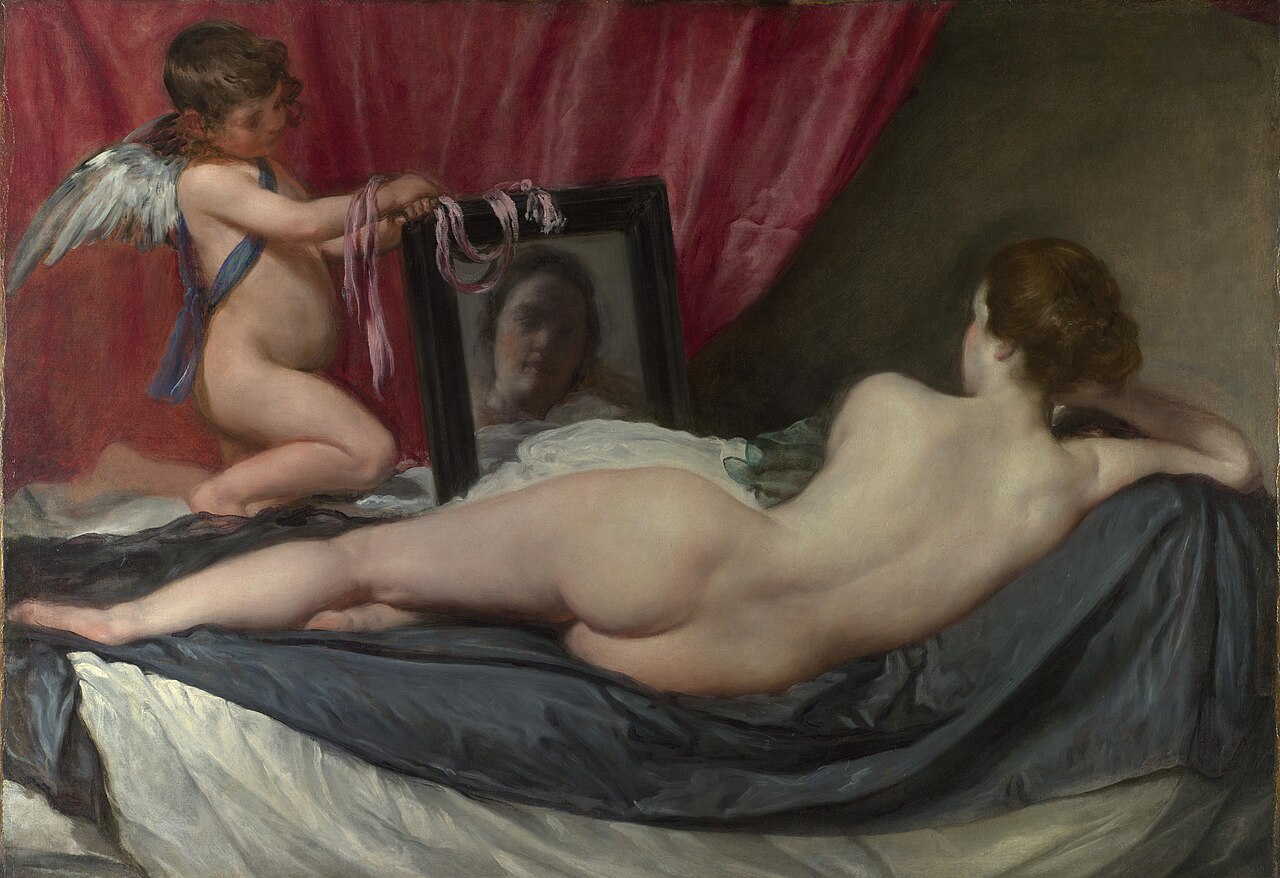
The Rokeby Venus
Diego Velázquez · 1647–1651
Venus looks toward a mirror, but we also become aware of the act of looking itself.
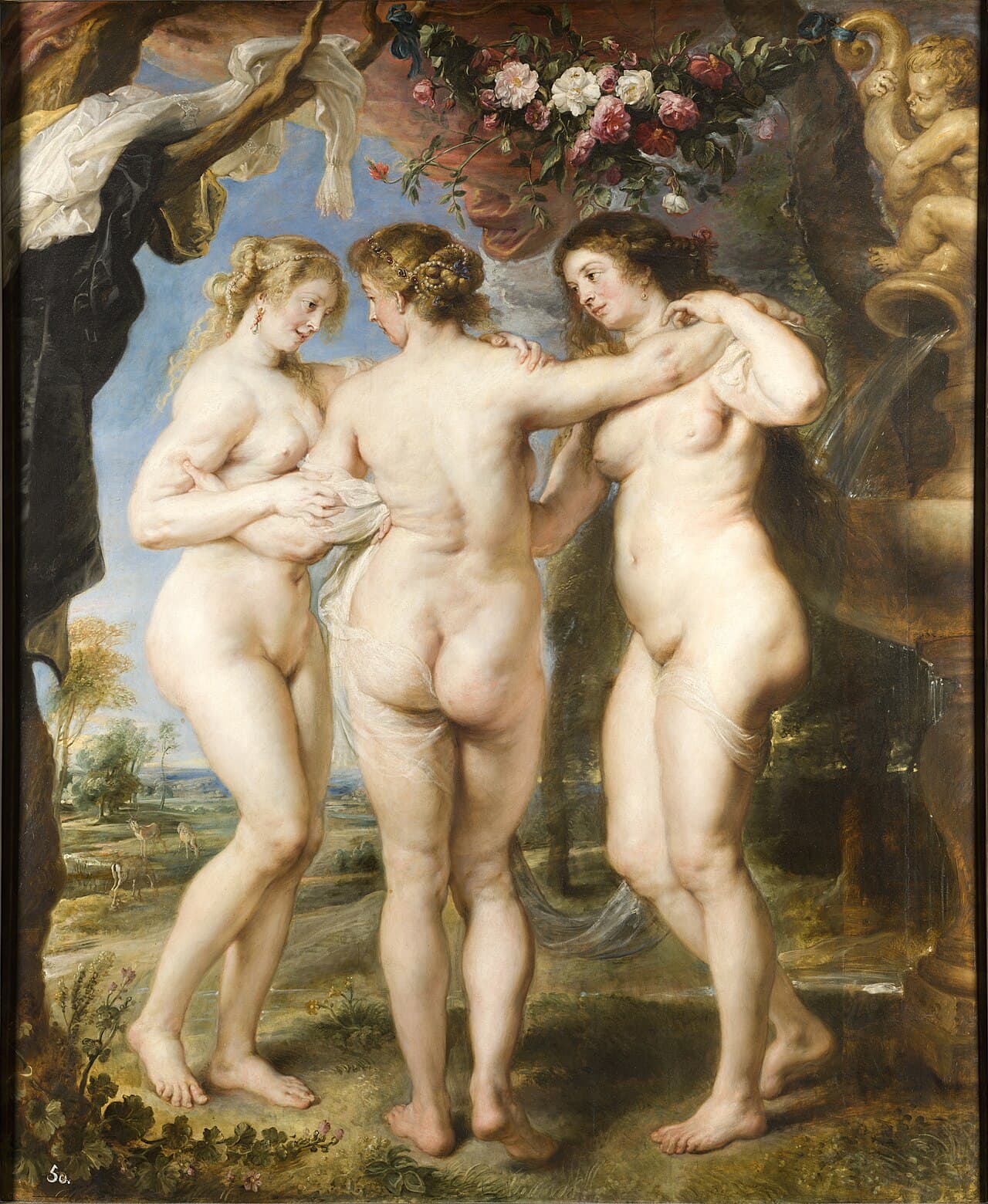
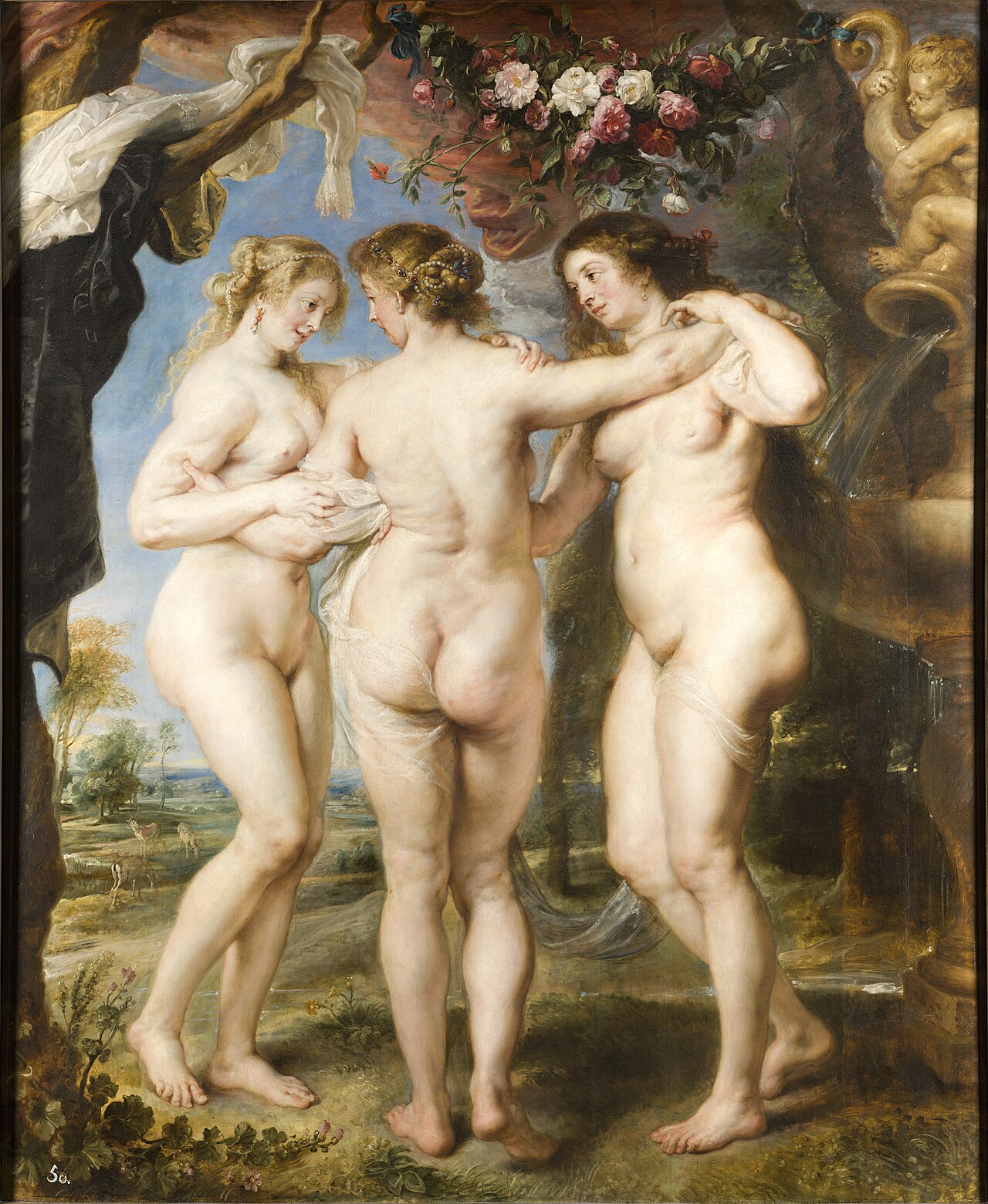
The Three Graces
Peter Paul Rubens · 1630–1635
Three figures replace the solitary Venus; grace is presented as rhythm, gesture, and exchange.
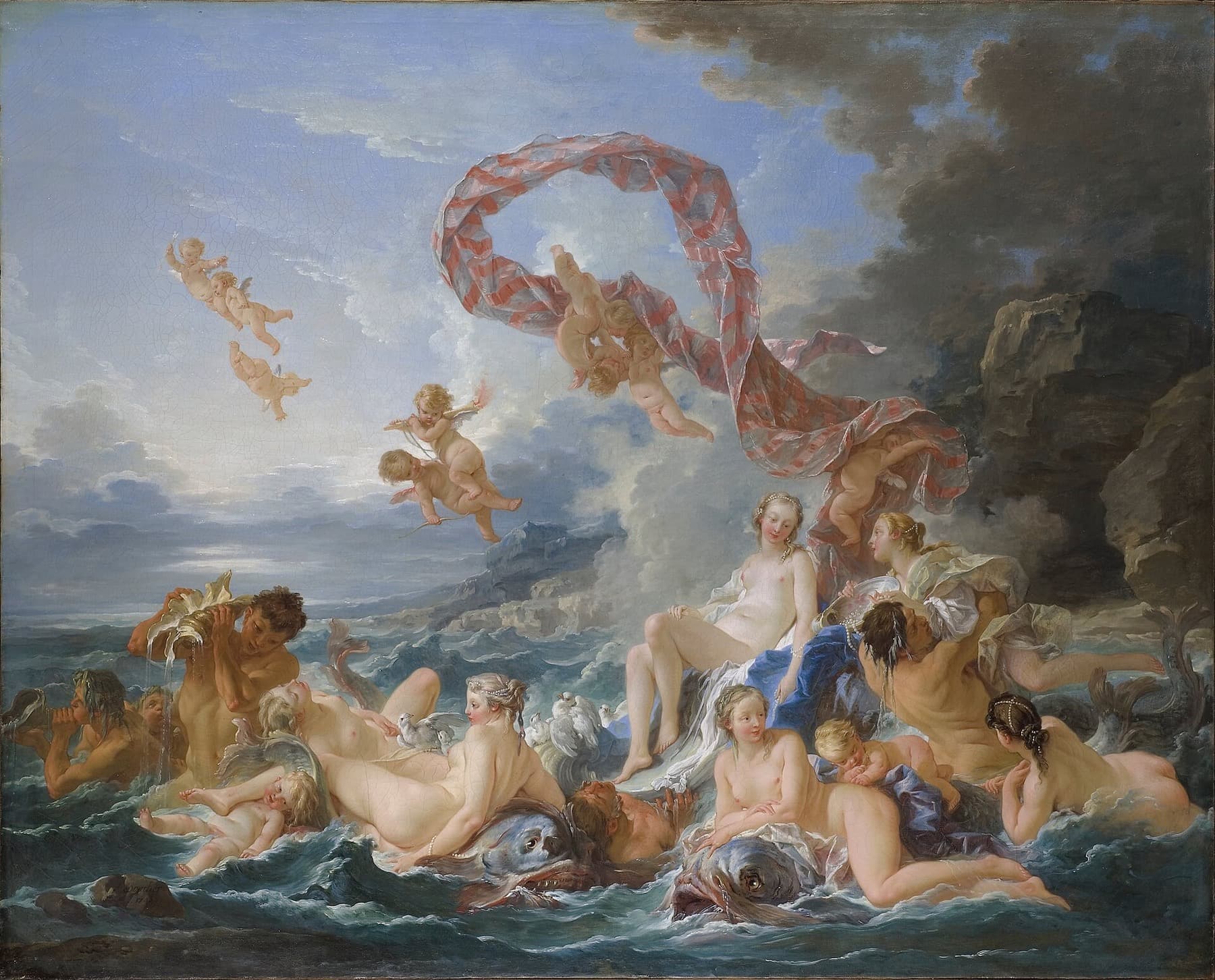
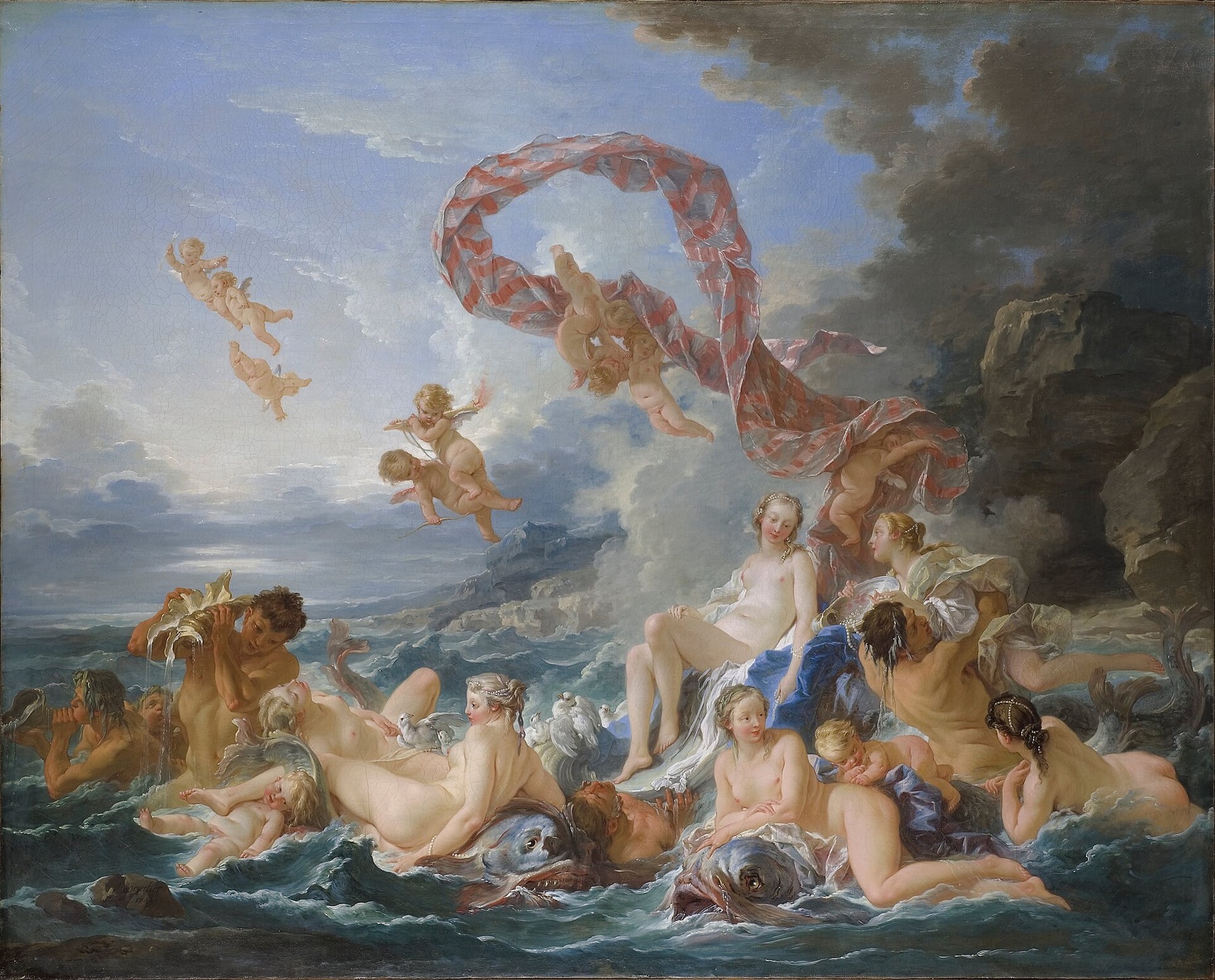
The Triumph of Venus
François Boucher · 1740
A crowd of figures and swirling fabric transforms Venus into the center of an extravagant sea-born spectacle.
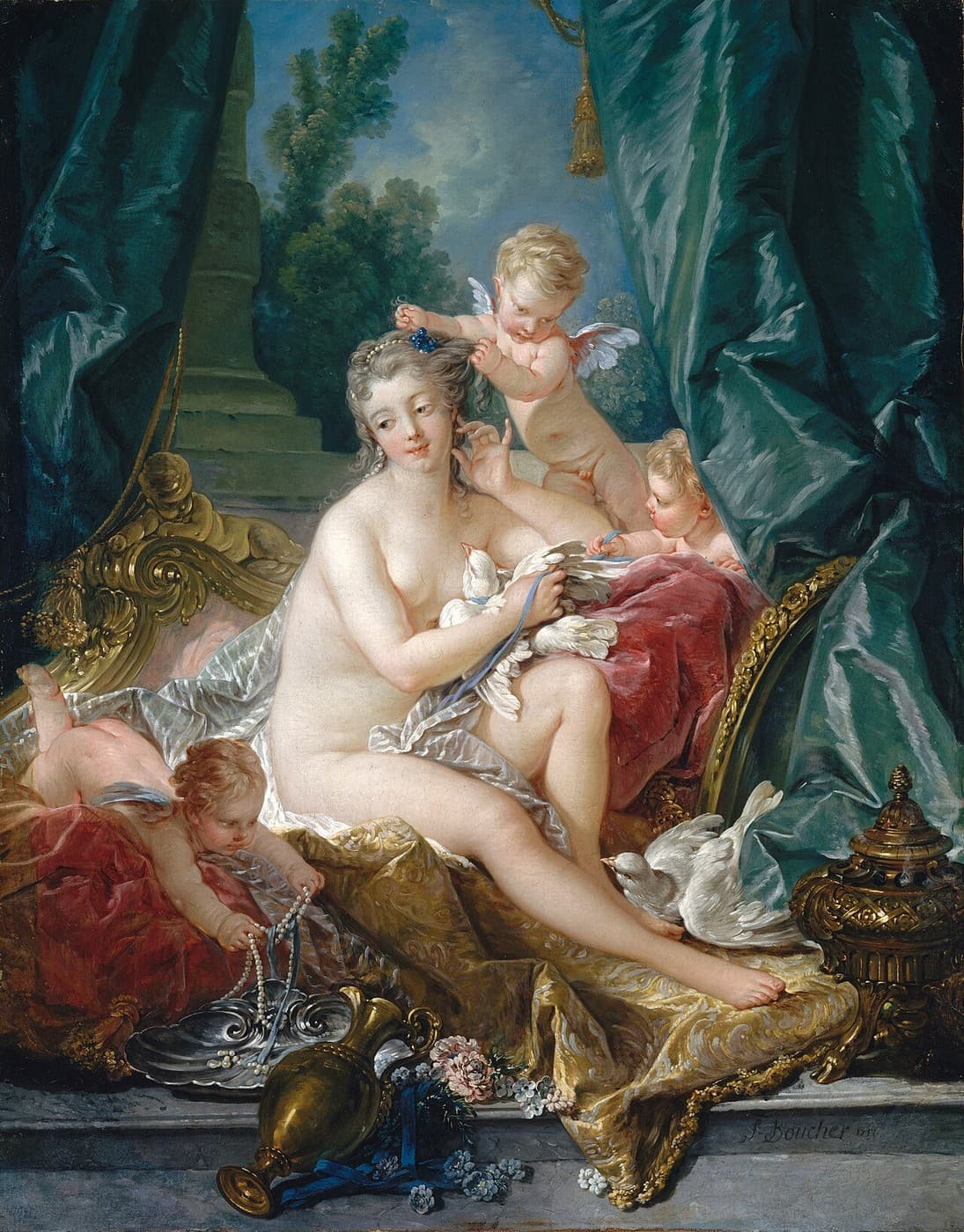
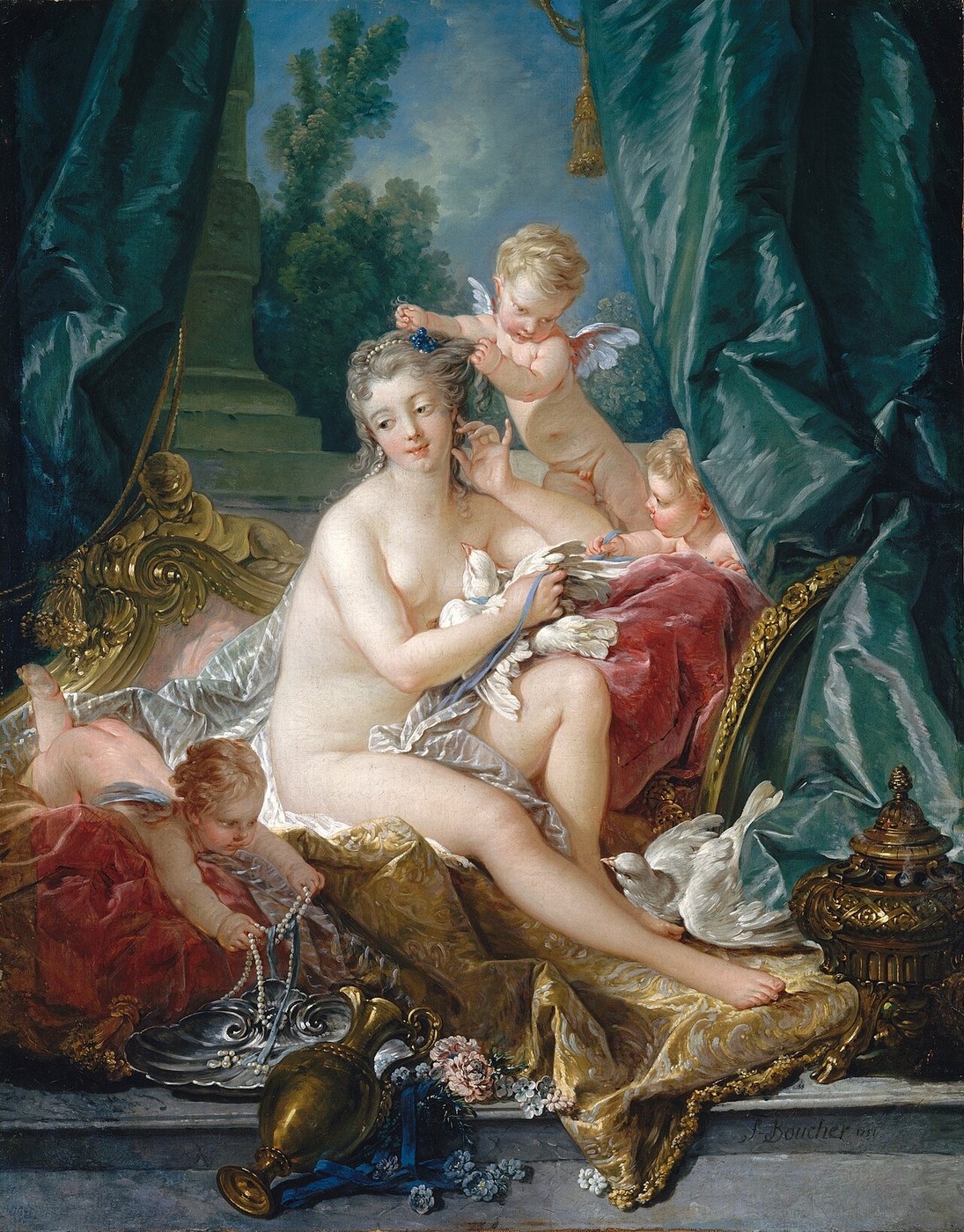
The Toilet of Venus
François Boucher · 1751
Here beauty is a performance of preparation, ornament, and the intimate rituals of a goddess.
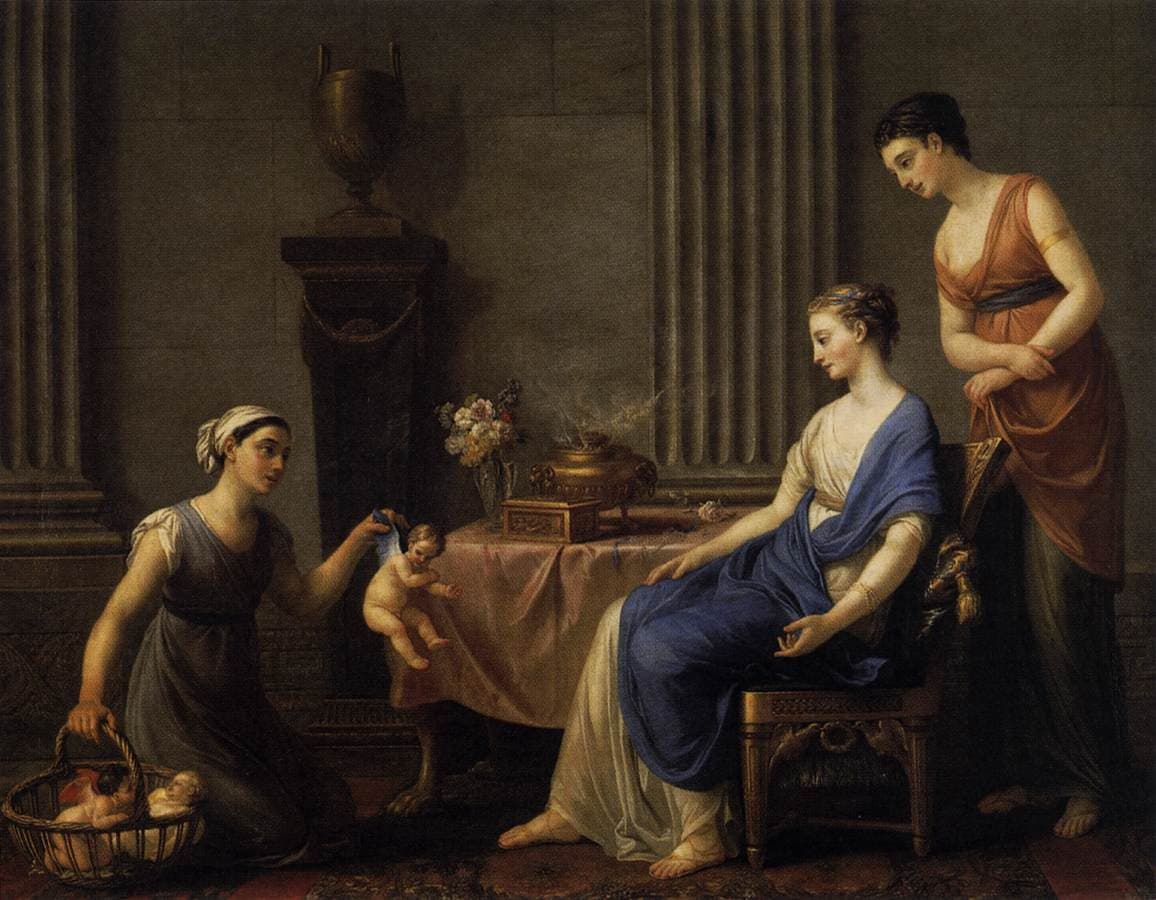
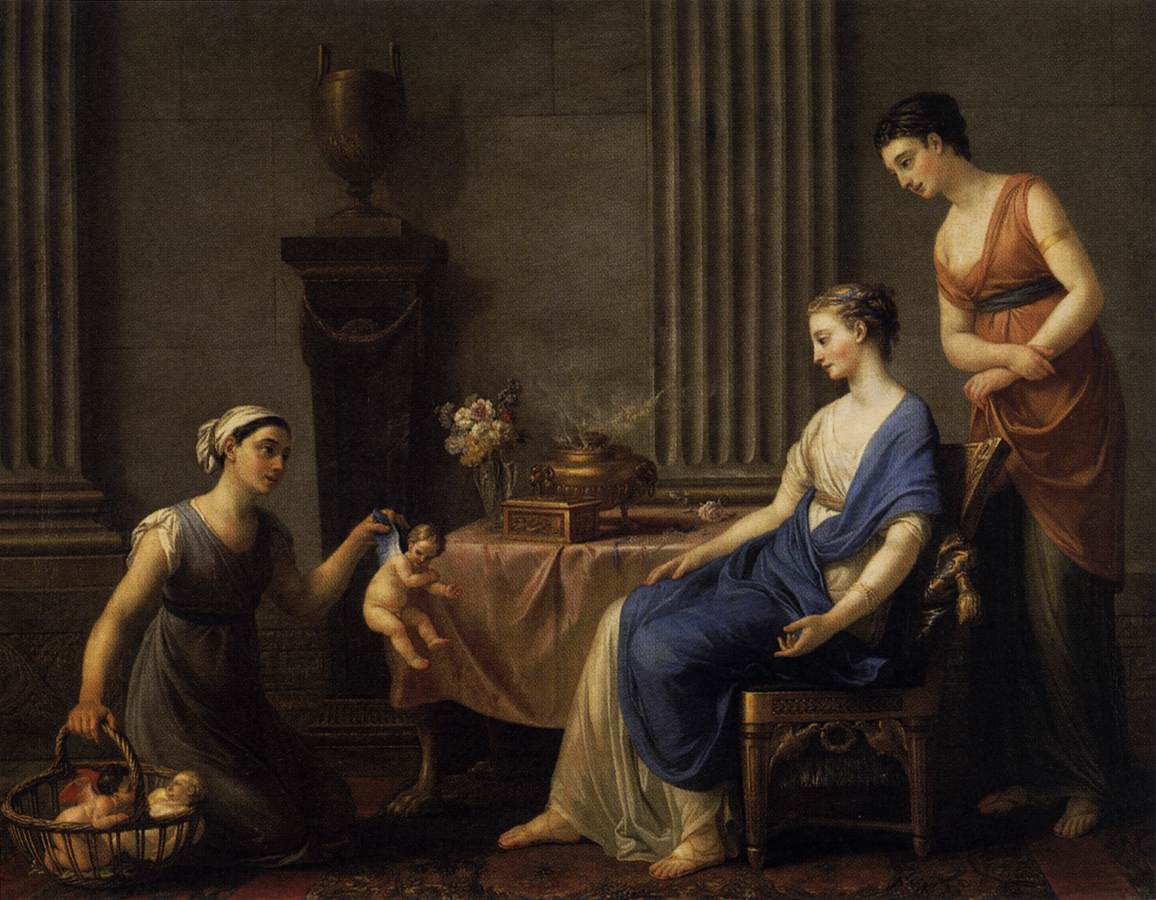
The Seller of Cupids
Joseph-Marie Vien · 1763
Little winged cupids become objects of exchange. Even love can be staged as a marketplace.
The goddess stays recognizable; what each age wishes to see does not.