The Modern City
Crowds, streets, and new ways of seeing
Cities collect ambition, commerce, strangers, speed, and solitude. Beginning with an imagined tower, this exhibition moves toward the boulevards, stations, and nightlife of the modern world.
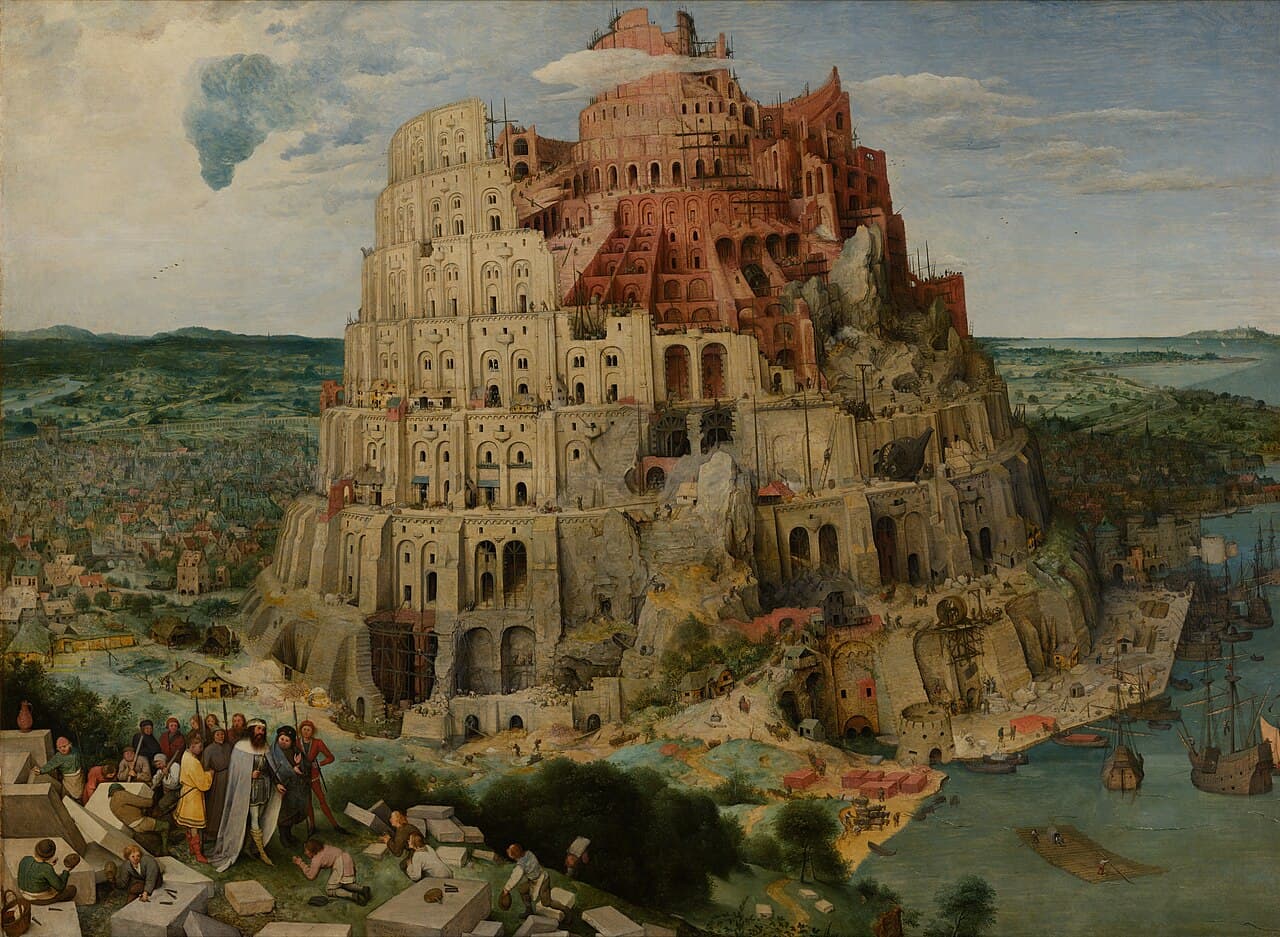
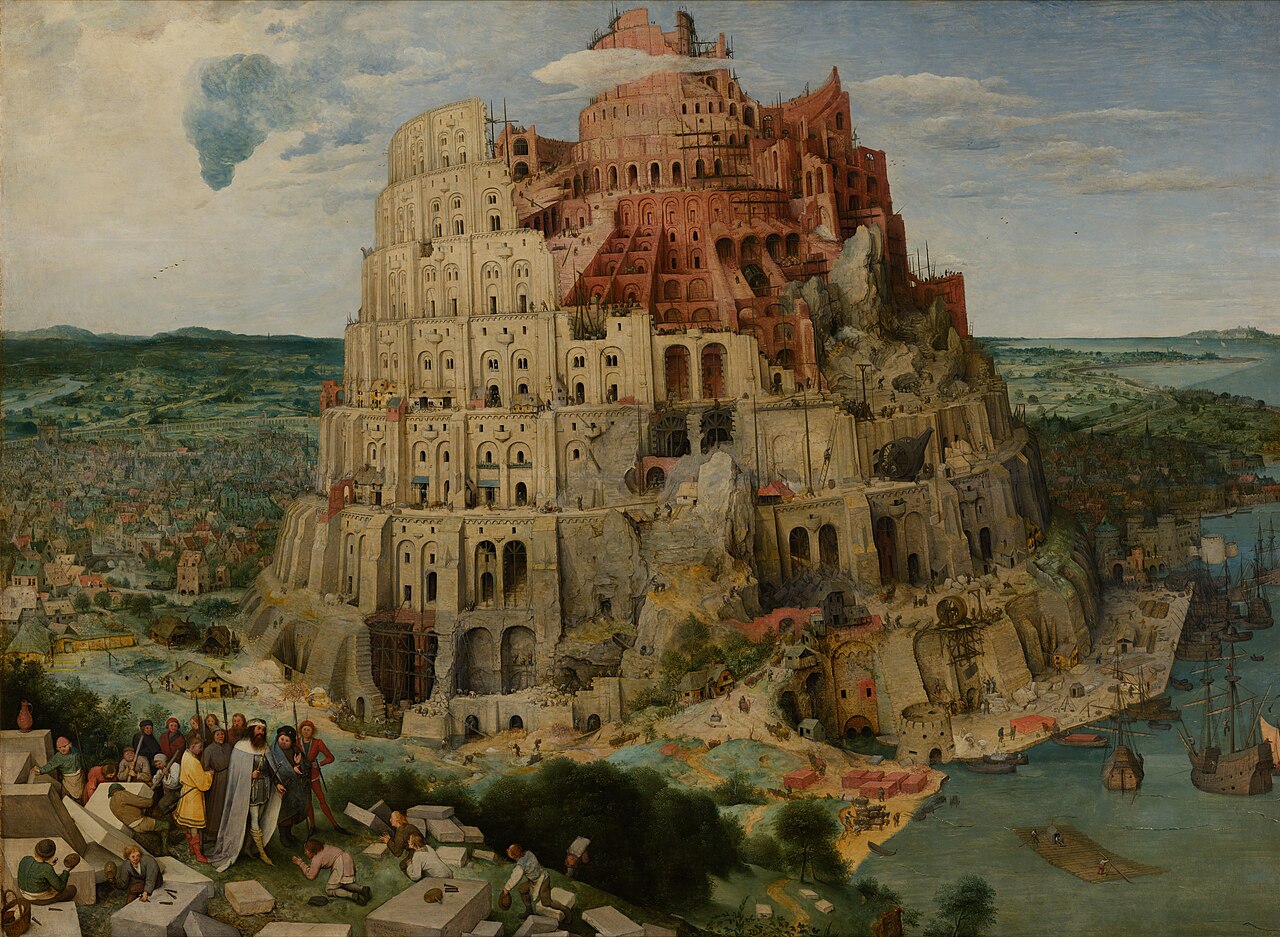
The Tower of Babel
Pieter Bruegel the Elder · 1563
An impossible tower makes the city an image of ambition and the limits of collective desire.
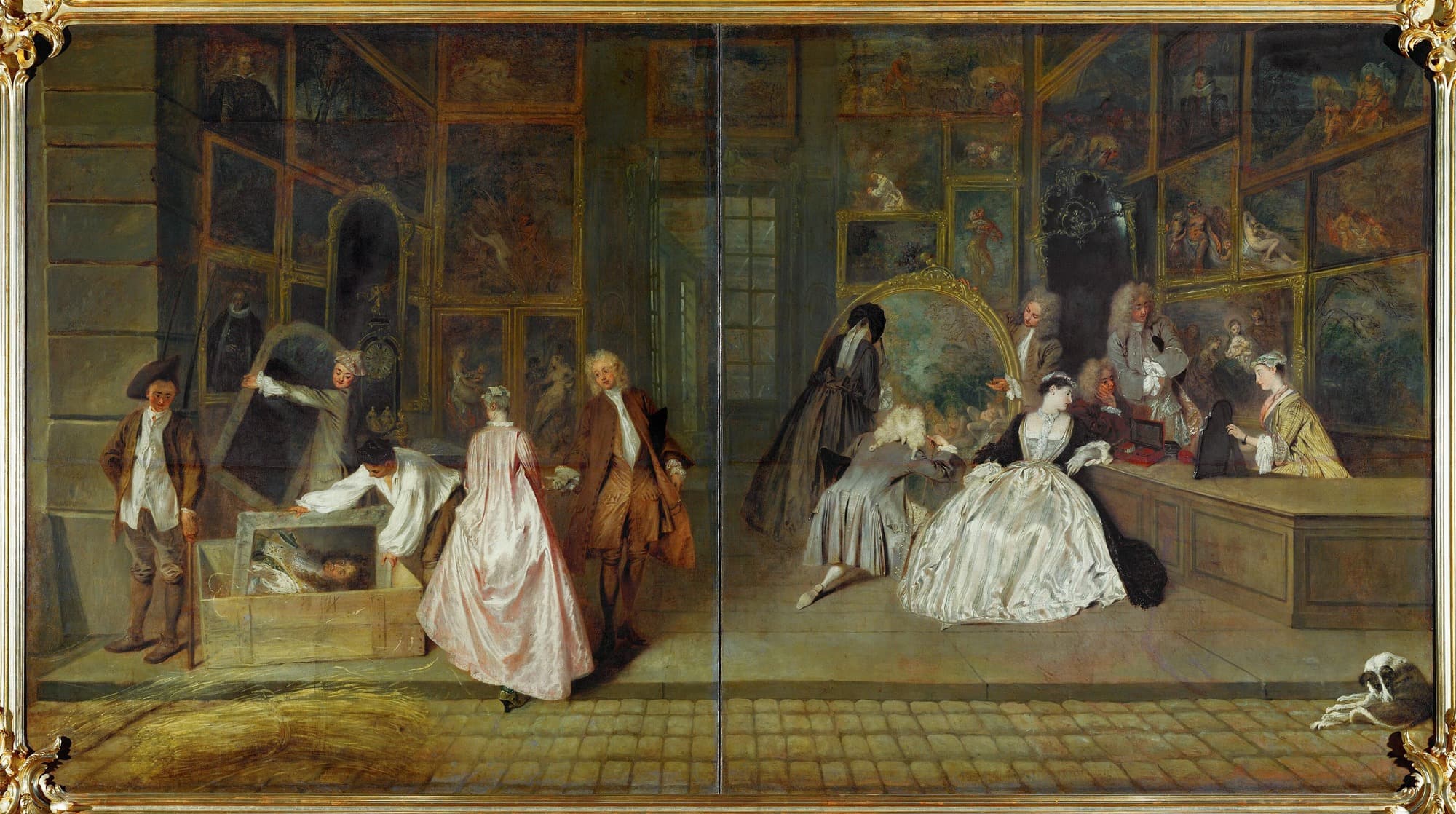
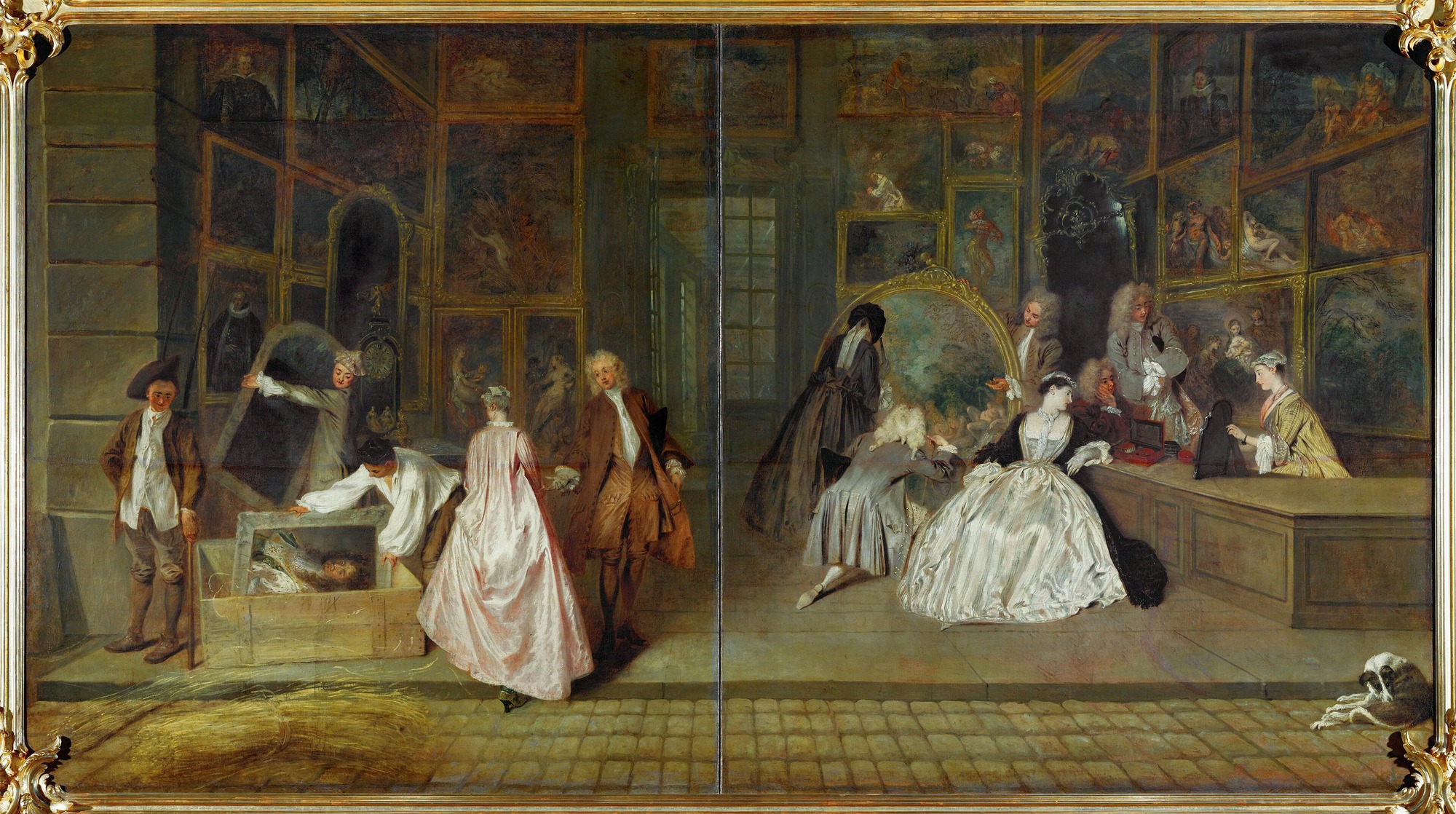
The Shop Sign of Gersaint
Jean-Antoine Watteau · 1720
A shop sign fills with browsers, objects, and exchange. The street moves into the world of art.
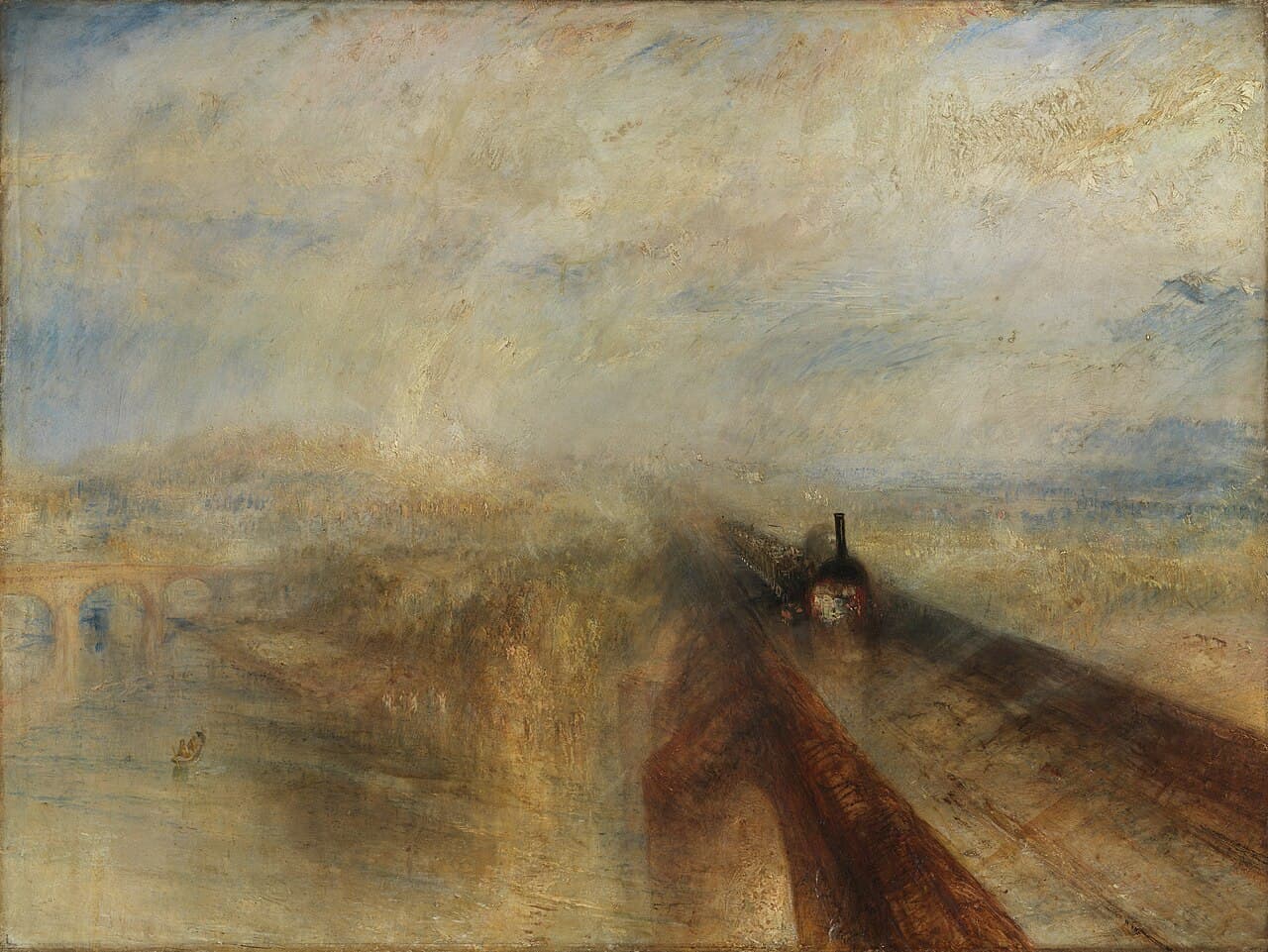
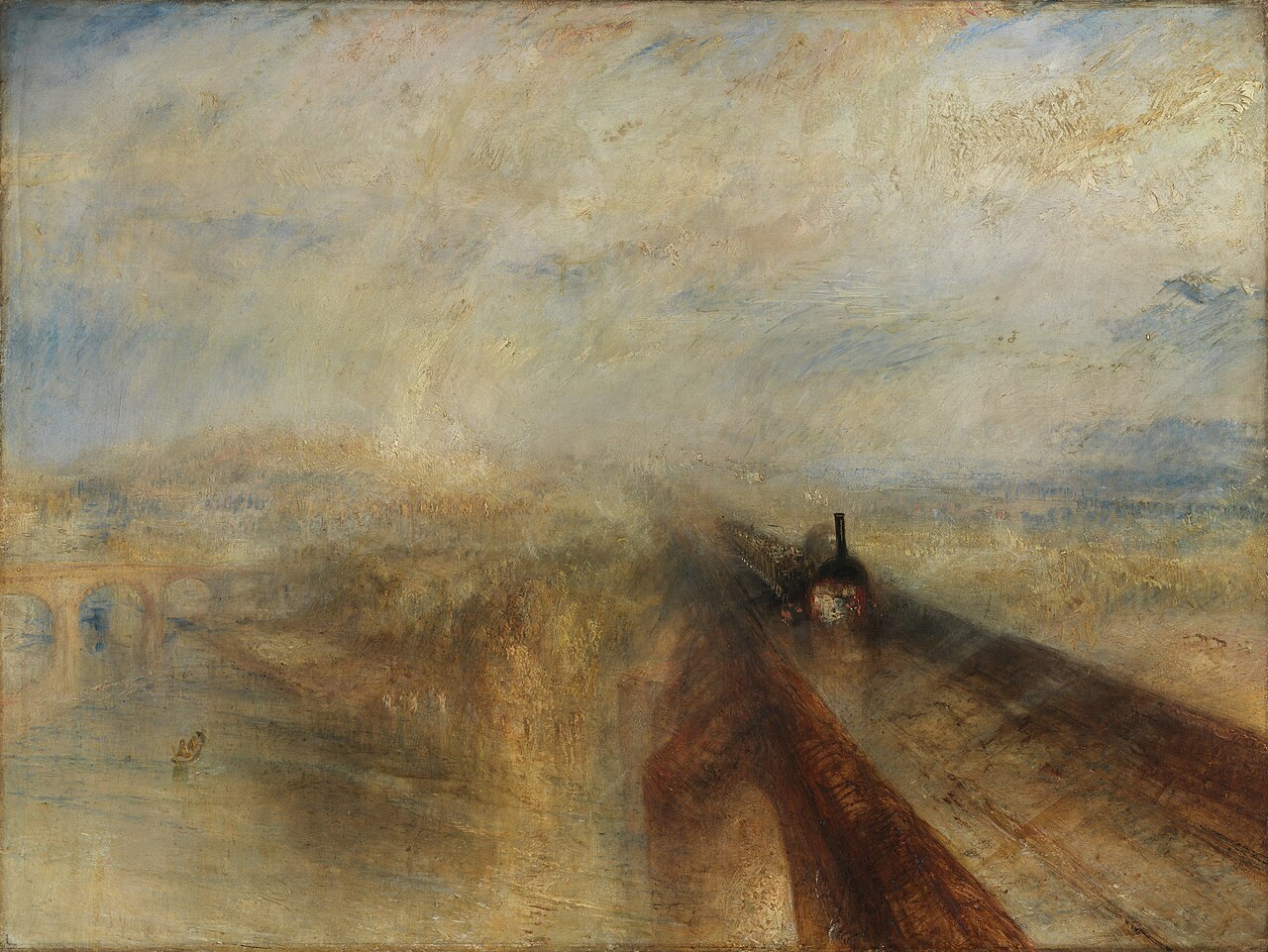
Rain, Steam and Speed – The Great Western Railway
J. M. W. Turner · 1844
A train races through rain and vapor. Modern speed starts to reshape the very look of landscape.
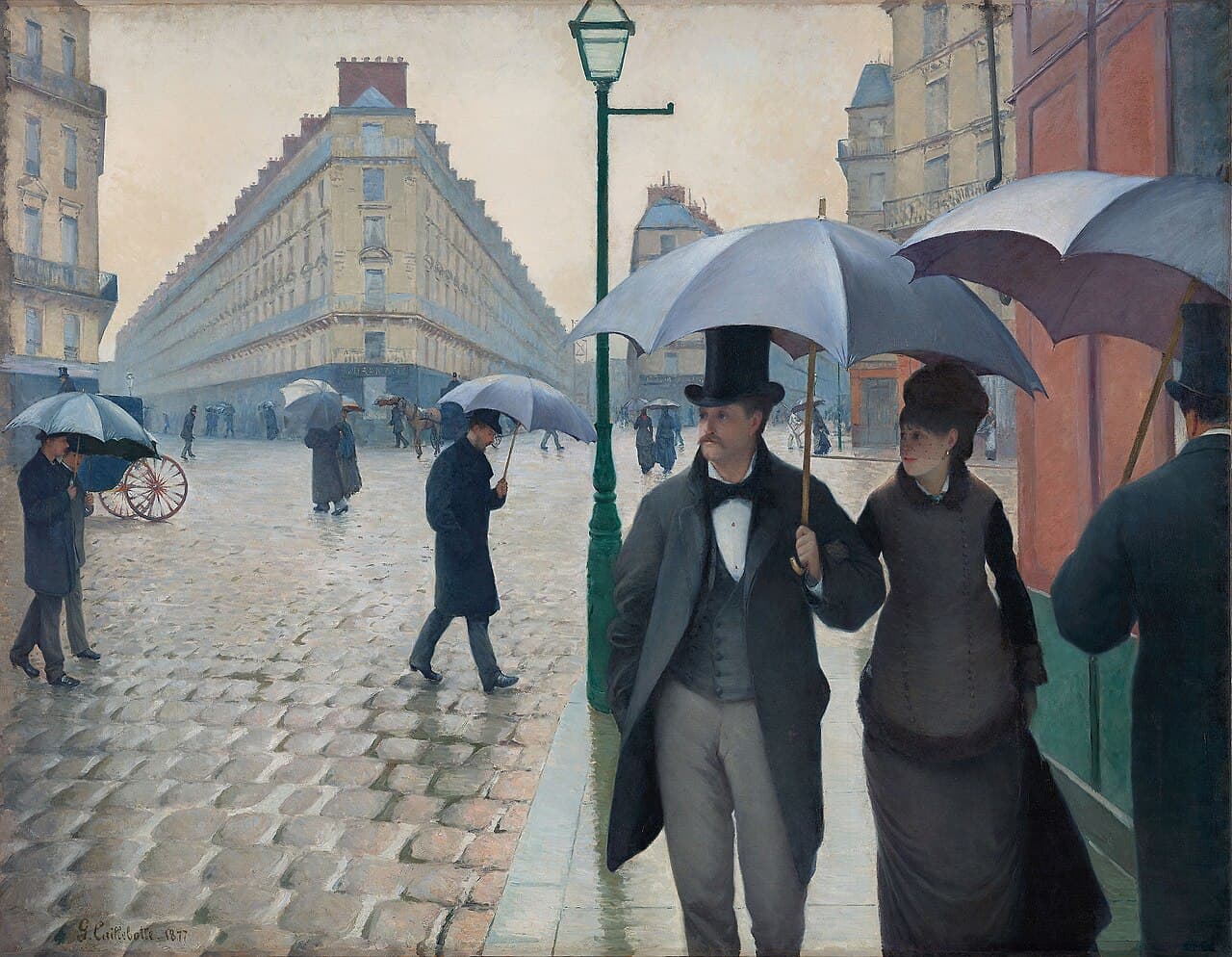
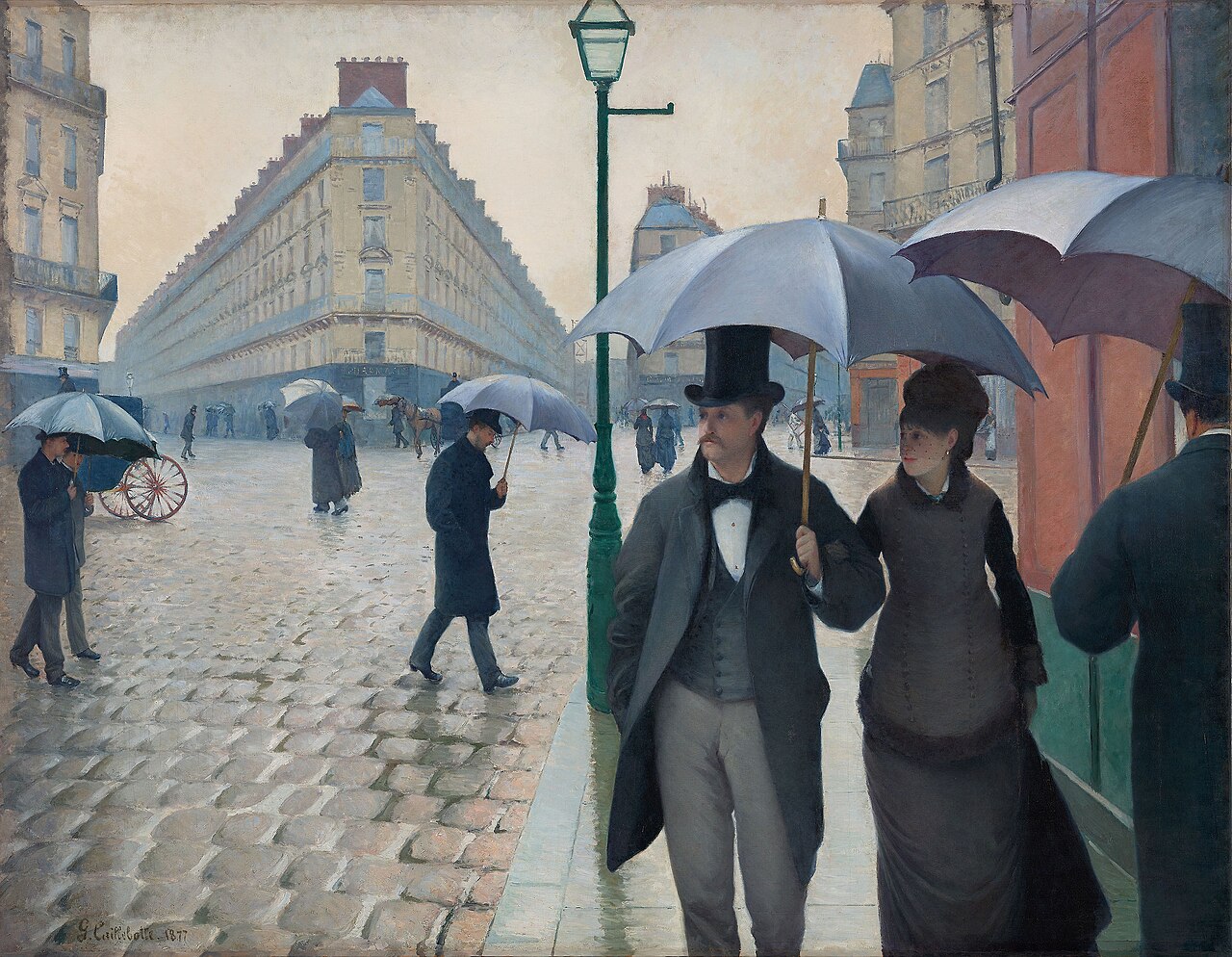
Paris Street; Rainy Day
Gustave Caillebotte · 1877
Wet pavement, umbrellas, and measured streets make anonymous city life unexpectedly monumental.
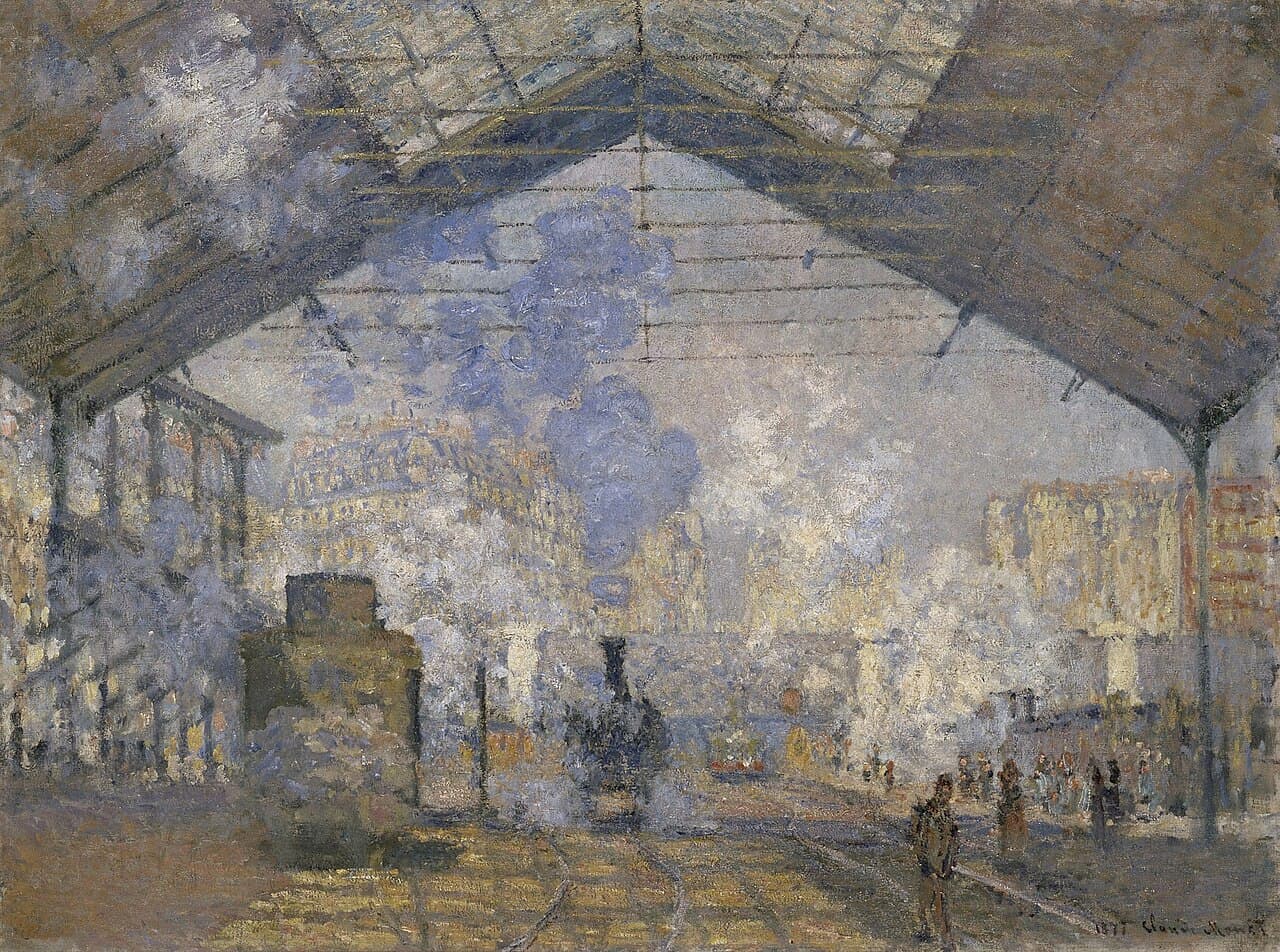
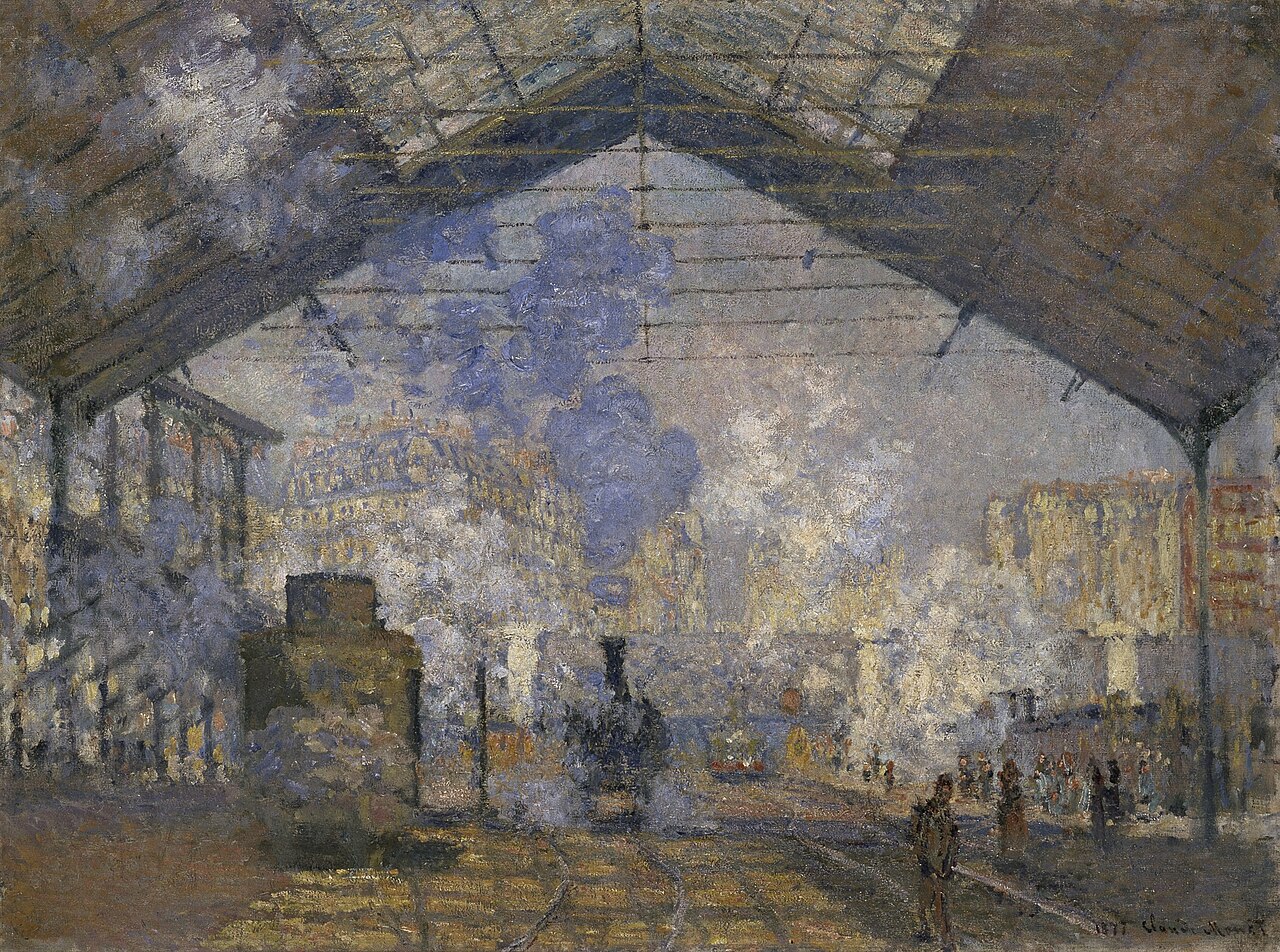
The Gare Saint-Lazare
Claude Monet · 1877
Steam clouds a station. A structure built for practical movement becomes a spectacle of atmosphere.
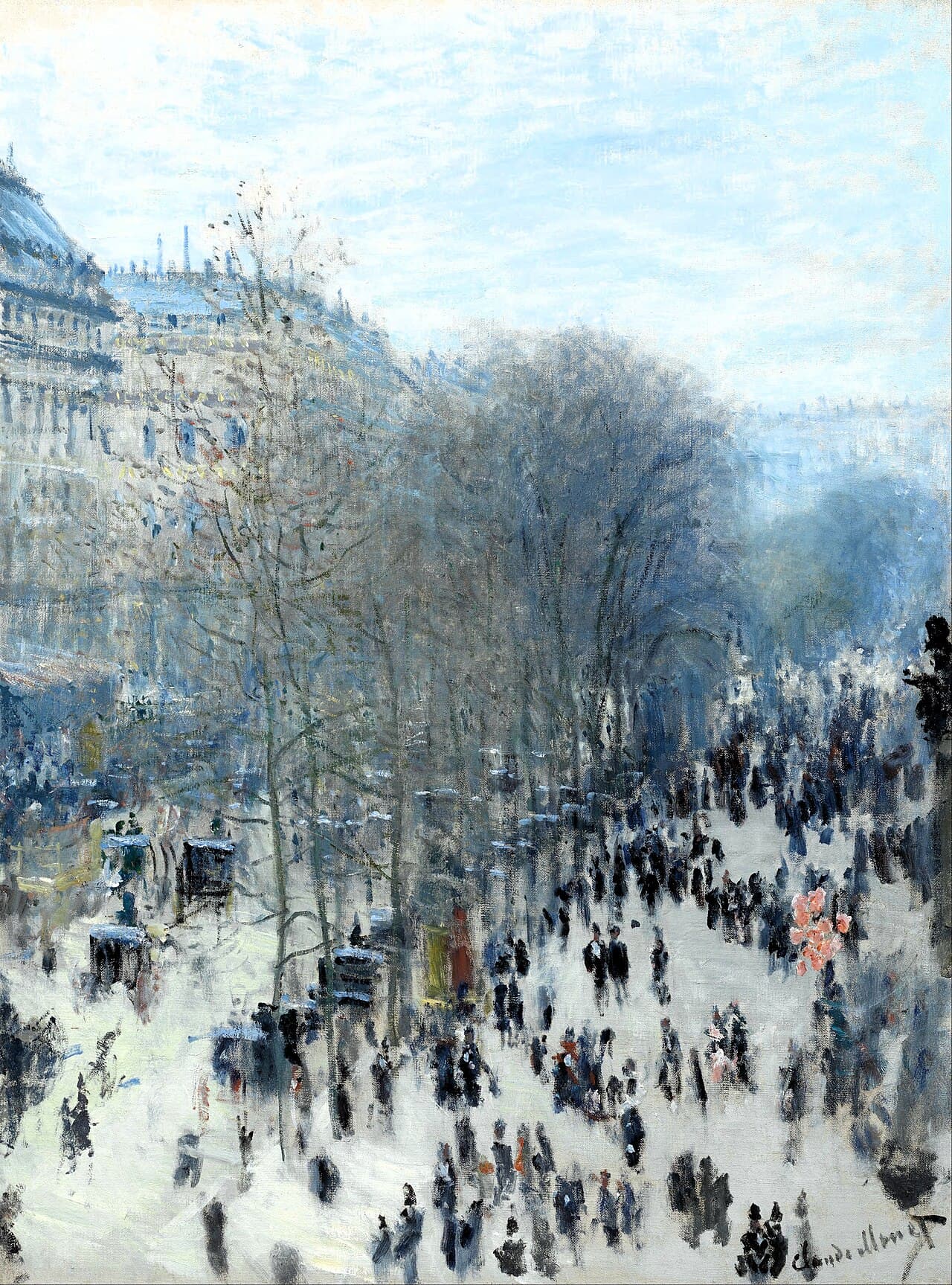
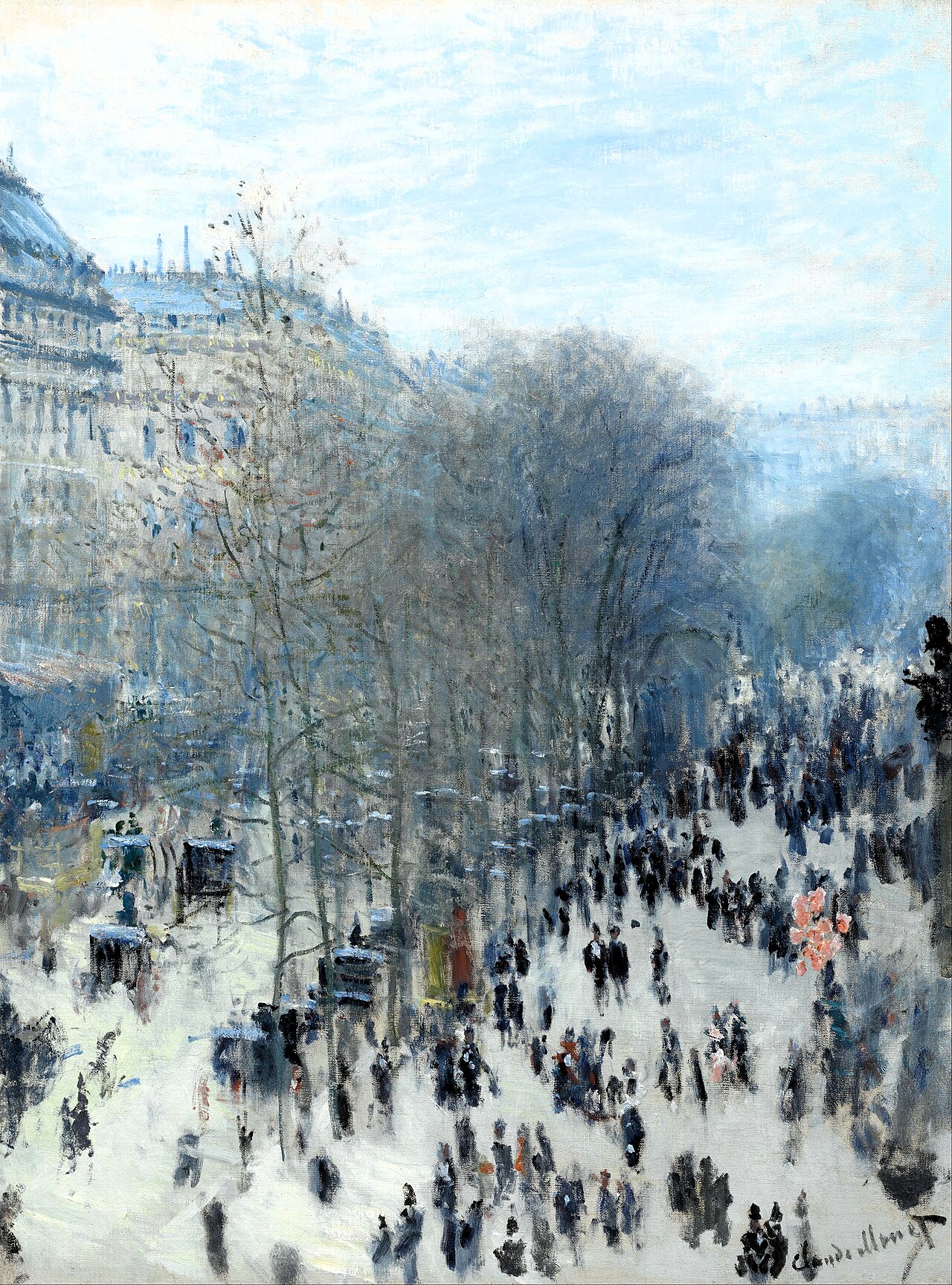
Boulevard des Capucines
Claude Monet · 1873–1874
The boulevard is seen from above as a living stream of people and motion.
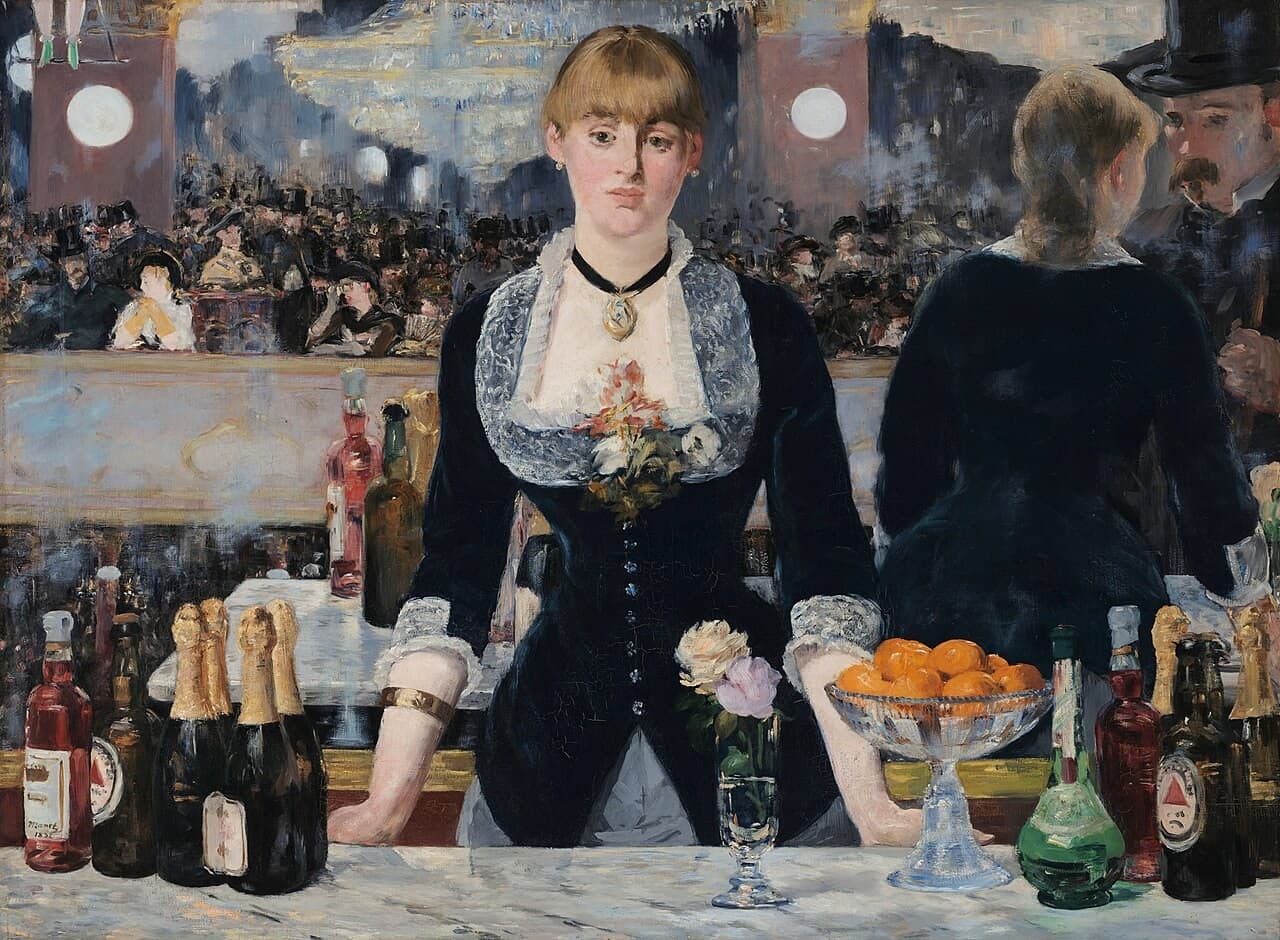
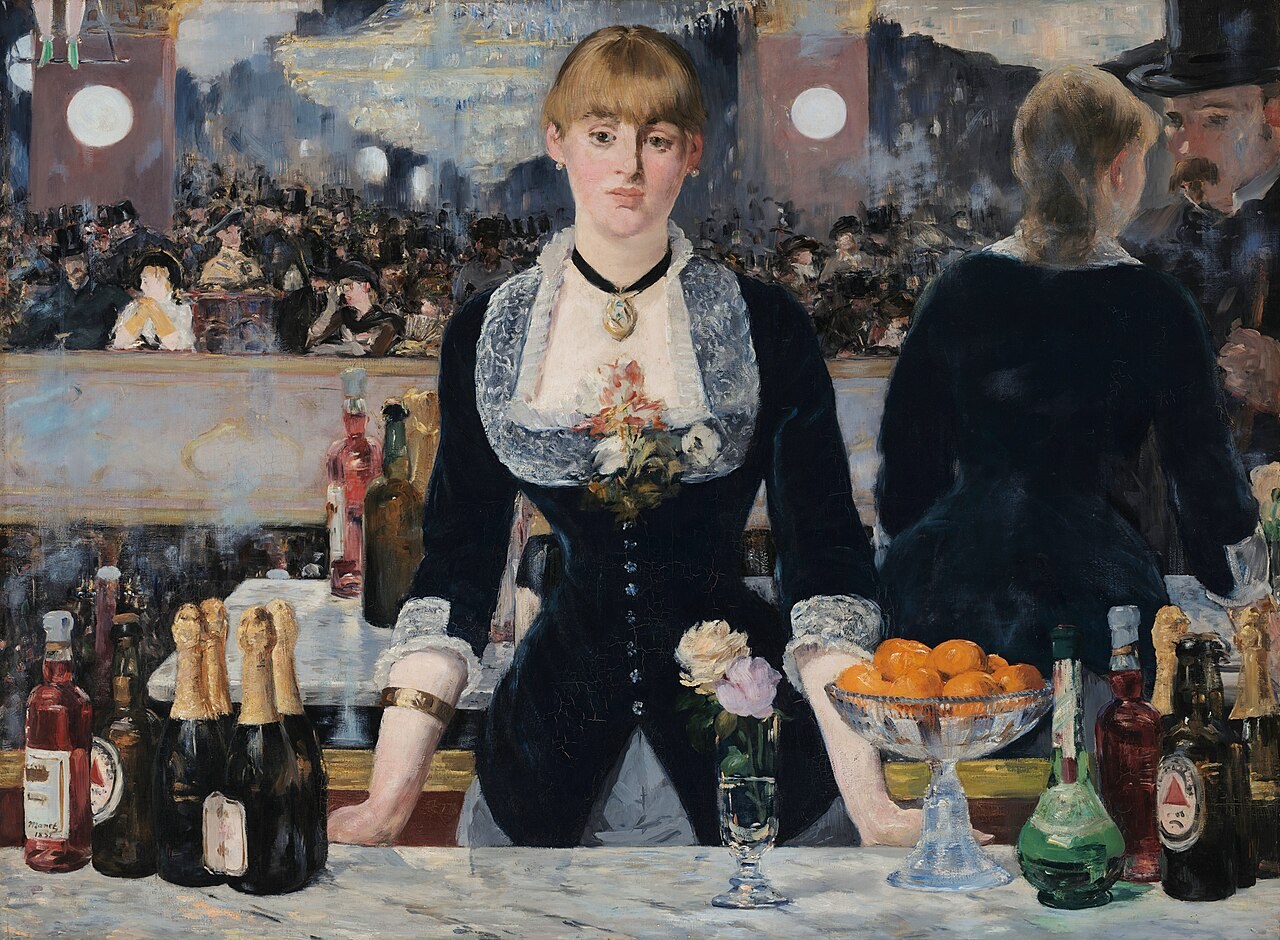
A Bar at the Folies-Bergère
Édouard Manet · 1881–1882
A figure stands behind a counter while a crowded world appears in reflections.
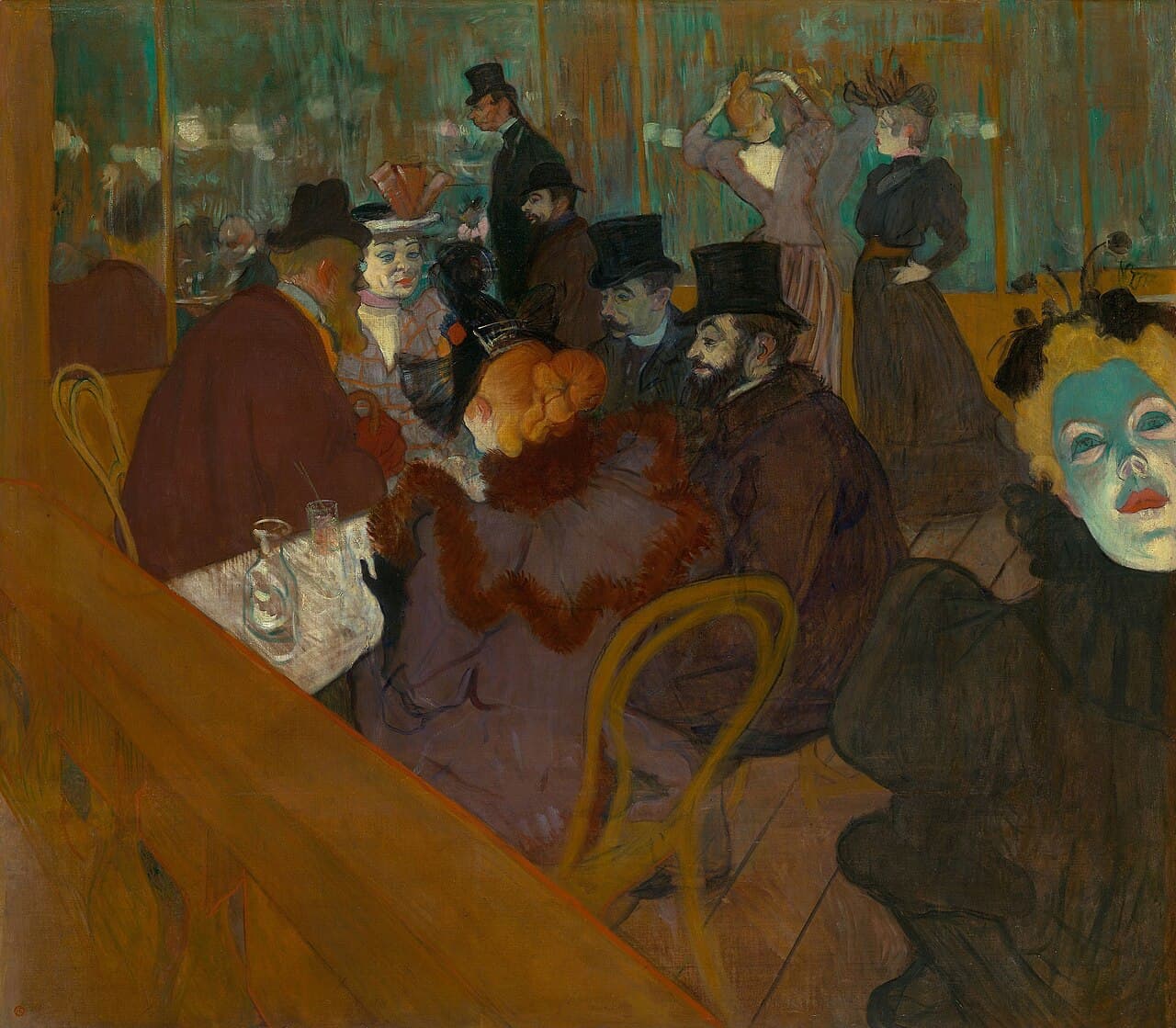
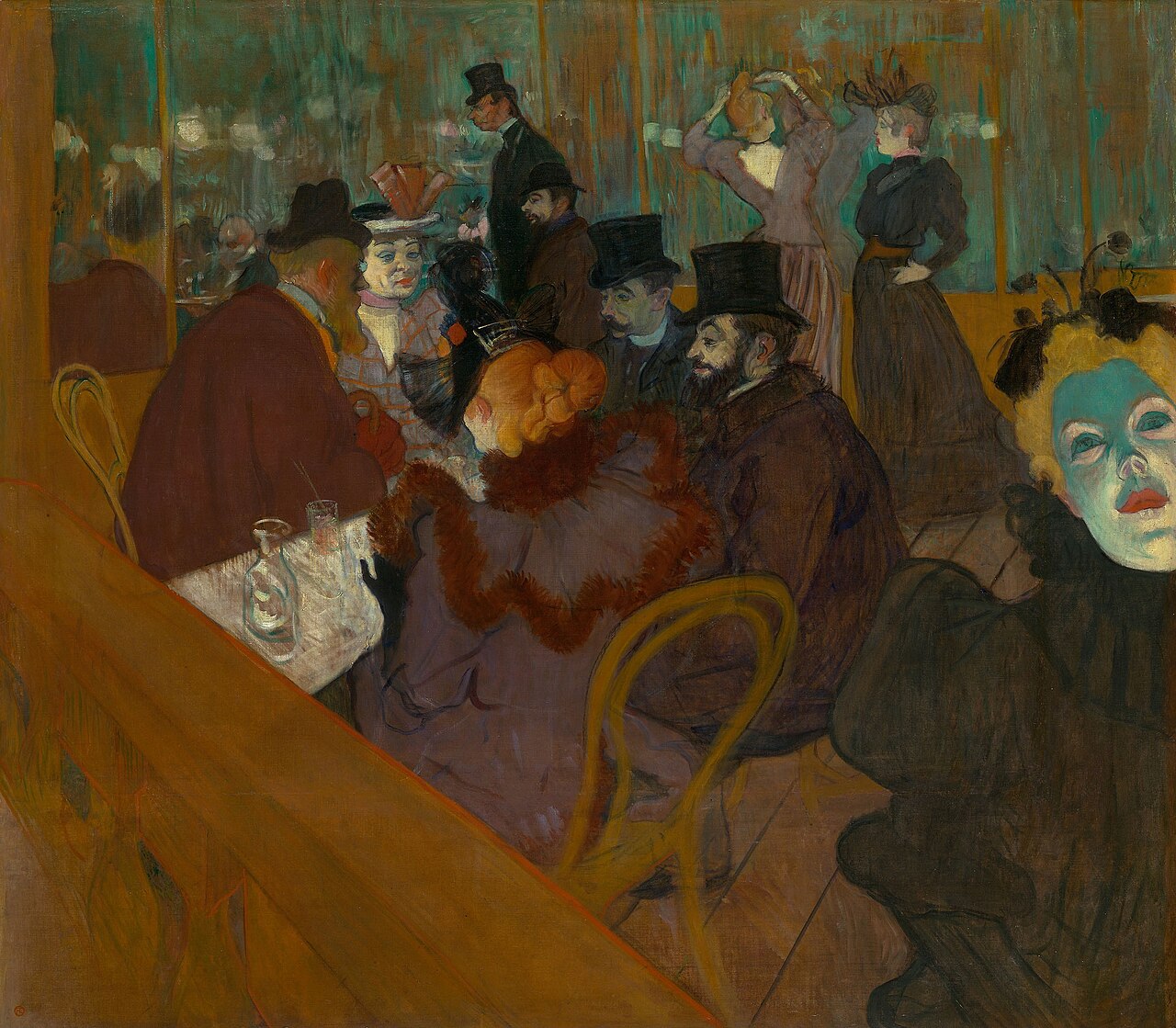
At the Moulin Rouge
Henri de Toulouse-Lautrec · 1892
Artificial light and cropped figures bring modern nightlife almost uncomfortably close.
The modern city is never still; the painter must decide where to look.